📊 Daily Commodity Intelligence — Friday, March 20, 2026
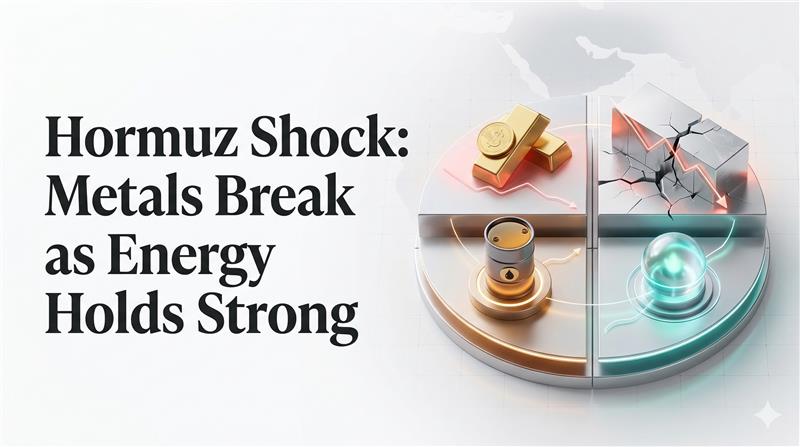
The Hormuz Paradox: Gold Bounces Back, Silver Cracks, Oil Holds the War Premium, Gas Eyes Recovery
The commodity complex is navigating a historic crossroads in March 2026. The near-closure of the Strait of Hormuz — the world’s most critical oil chokepoint carrying nearly 20 mb/d — has created the largest supply disruption in modern oil market history, sending WTI to a high of ~$106 before a post-FOMC hawkish pullback. Meanwhile, a dramatic paradox has unfolded in precious metals: Gold has dropped 15.9% from its January 2026 ATH of $5,593 despite the geopolitical shock, as the post-Fed dollar surge forced liquidation of leveraged longs. Silver’s correction has been even sharper — down over 40% from its cycle high of $121.73. Natural Gas, however, marches to a different drummer: Hormuz-driven LNG supply disruption to Europe and Asia is quietly supporting Henry Hub prices toward the EIA’s 2026 average forecast of $3.80/MMBtu. Today’s landscape is one of divergence: two commodities under USD pressure (Gold, Silver) and two commodities reshaping their supply narratives (Crude Oil, Natural Gas).
🛢 Hormuz Near-Closure
📉 Gold −15.9% from ATH
⚡ Silver −41% from ATH
🏛 Fed Hawkish Hold
📈 Oil War Premium $95
🔥 Gas LNG Demand Shift
💵 DXY above 100
🏦 Gold/Silver Ratio 65x
01
Live Market Snapshot
As of March 20, 2026 · Daily
CORRECTING
🥇
Gold (XAU/USD)
$4,683.60
O:4650.91 · H:4735.45 · L:4633.86
ATH: $5,593.67 | −15.9% from top
OVERSOLD
🥈
Silver (XAG/USD)
$71.782
O:73.113 · H:74.533 · L:71.203
ATH: $121.73 | 0.618 Fib test
WAR RANGE
🛢
WTI Crude Oil
$95.02
O:94.90 · H:95.24 · L:92.93
Hormuz −10mb/d | 0.382 Fib pivot
RECOVERING
🔥
Natural Gas (NG1)
$3.145
O:3.120 · H:3.146 · L:3.098
EIA forecast $3.80 | Near 0.236 Fib
02
Macro & Fundamental Intelligence Matrix
Key Drivers — 24–48 Hr Commodity Impact
🏛 Central Bank Decisions — March 18–19, 2026
| Bank | Decision | Rate | Commodity Impact |
|---|
| 🇺🇸Federal Reserve |
HOLD |
3.50–3.75% |
GOLD/SILVER BEAR |
| 🇪🇺ECB |
HOLD |
2.15% |
EUR WATCH |
| 🇬🇧Bank of England |
HOLD |
3.75% |
GBP WATCH |
| 🇨🇭SNB |
HOLD |
0.00% |
CHF VOLATILE |
| 🇯🇵Bank of Japan |
HOLD |
0.75% |
RISK SENTIMENT |
📅 High-Impact Events — Today & Next 24 Hours
| Country | Event | Impact | Comm. Bias |
|---|
| 🇺🇸USA |
Jobless Claims (Weekly) |
HIGH |
GOLD WATCH |
| 🇺🇸USA |
New Home Sales (Jan) |
MED |
NEUTRAL |
| 🇺🇸USA |
Powell / Fed Speeches |
HIGH |
METALS BEAR |
| 🇺🇸USA |
EIA Petroleum Storage |
HIGH |
OIL VOLATILE |
| 🌍GEO |
Iran / Hormuz Headlines |
EXTREME |
ALL ENERGY ↑ |
| Theme |
Situation |
24-Hr Commodity Implication |
| ⚔️ Strait of Hormuz |
IEA confirms ~10 mb/d cut in Gulf production. Near-closure of Hormuz. Brent briefly near $120 before settling around $95–100. Tanker traffic at a trickle. Iraq, Kuwait, UAE, Qatar, Saudi Arabia all curtailing production. |
WTI range anchored near $90–100. Any escalation spikes to $105–$120. Any ceasefire signal drops $10–$20 in minutes. EIA forecasts Brent above $95 for next two months. |
| 🏛 Fed Hawkish Hold |
FOMC held rates at 3.50–3.75%. PCE forecast raised to 2.7%. Only 1 cut pencilled in for 2026. Powell: “inflation progress stalled.” DXY broke above 100 — 10-month high. |
Strong USD = negative for gold, silver, and all USD-denominated commodities. 10-yr real yields rising from 1.66% to 1.86% adds pressure on non-yielding gold. Short-term bearish for precious metals unless USD reverses. |
| 🥇 Gold Paradox |
Gold dropped $100+ post-FOMC despite Iran war. The paper market (futures/ETFs/leveraged positions) was forced to sell as dollar surged and margin calls hit. ATH at $5,593.67 in January 2026. Now at $4,683 — testing 0.786 Fib at $4,541. |
Gold at a critical decision zone. Holds 0.786 Fib ($4,541) = strong bull case for recovery toward $5,082 (0.382 Fib). Breaks below $4,400 = deeper correction toward $4,000. Long-term fundamentals (central bank buying, geopolitical risk) remain intact. |
| 🥈 Silver Industrial Risk |
Silver fell over 5.6% in a single session after FOMC. Gold/Silver ratio rising to 65x — historically elevated, suggesting silver is undervalued relative to gold. ATH was $121.73. Silver now at $71.78 — testing 0.618 Fib at $76.60. |
Silver caught between safe-haven selling (USD strength) and industrial demand fears (slowing global growth). However, Gold/Silver ratio at 65x and approach to 0.618 Fib support creates a potential medium-term long setup near $60–$64. |
| 🔥 Natural Gas LNG Shift |
Hormuz near-closure is disrupting Gulf LNG exports to Europe and Asia, forcing fuel-switching demand toward US LNG (Henry Hub). Mild Feb temperatures left storage above seasonal norms. EIA forecasts $3.80/MMBtu average for 2026. |
Gas recovering from $2.77 low toward EIA’s $3.80 target. The 0.236 Fib level ($3.155) is the current pivot. A hold above $3.00 (0 base Fib) confirms the bottoming structure. LNG fuel-switching demand is the key bullish catalyst unique to gas vs oil. |
03
Commodity Deep-Dive Analysis
Technical · Fundamental · Trade Setup

GOLD · D1 · CSFX Research · TradingView
Trend & Structure
Gold’s primary bull market remains structurally intact — the January 2026 ATH at $5,593.67 (Fib 0 / swing top) was a record high representing a 60%+ surge from early 2025. However, the post-FOMC hawkish hold triggered a violent corrective phase, with price retracing sharply. Currently at $4,683, gold is sitting between the 0.618 Fib at $4,766 (below) and the 0.5 Fib at $4,924 (above). The descending dashed trendline from the February high caps any recovery attempt. The paradox: geopolitical risk (Hormuz) is supportive long-term, but USD strength is suppressing short-term price. The 0.786 Fib at $4,541 is now the critical bull-market lifeline.
Fibonacci Levels
| Fib | Level | Role |
|---|
| 0 (swing top) | $5,593.67 | ATH / RESISTANCE |
| 0.236 | $5,277.61 | RESISTANCE |
| 0.382 | $5,082.09 | RESISTANCE |
| 0.5 | $4,924.06 | NEAR RESISTANCE |
| 0.618 | $4,766.03 | PRICE ZONE ↕ |
| 0.786 | $4,541.04 | KEY SUPPORT |
| 1.0 (base) | $4,444.83 | MAJOR SUPPORT |
Candlestick Patterns
The March daily candle sequence shows a bearish engulfing formed at the 0.382 Fib zone ($5,082) followed by continuation red candles. The current recovery candle today (+0.68%) is testing the underside of the 0.618 Fib ($4,766) — this level is critical. TradingView analysts flag that MA20 and MA50 have crossed below MA100 and MA200, confirming a medium-term bearish alignment. RSI shows bullish divergence at the $4,541 zone, hinting at potential stabilisation. A close above $4,766 would signal short-term relief rally toward $4,924.
Trade Setup
🟡 STRATEGIC: SELL-ON-RALLY · Near 0.618 Fib Resistance
DirectionSELL / SHORT (near-term)
Entry Zone$4,750 – $4,800 (0.618 Fib zone)
Stop Loss$4,940 (above 0.5 Fib)
Target 1$4,541 (0.786 Fib — bull lifeline)
Target 2$4,400 (round number / base Fib)
Risk/Reward1:1.8
Long-Term BiasBULLISH above $4,400 — ATH retrace

SILVER (XAG/USD) · D1 · CSFX Research · TradingView
Trend & Structure
Silver underwent a massive parabolic bull run — from its base at $48.599 (Fib 1.0) to an ATH of $121.737 (Fib 0) — gaining over 150% in 2025. Since the February 2026 top, the metal has been in a steep correction, now testing the 0.618 Fibonacci level at $76.598. Today’s low at $71.203 has actually pierced this level intraday, creating an important wick test. The Gold/Silver ratio at 65x is historically elevated — for context, the long-term average is 65–70x, suggesting silver is near relative fair value versus gold. The ascending dashed trendline from Nov 2025 has been decisively broken. The next major support cluster is the 0.786 Fib at $64.327.
Fibonacci Levels
| Fib | Level | Role |
|---|
| 0 (ATH) | $121.737 | ATH / MAJOR RES |
| 0.236 | $104.500 | RESISTANCE |
| 0.382 | $93.836 | RESISTANCE |
| 0.5 | $85.217 | RESISTANCE |
| 0.618 | $76.598 | PRICE BELOW ↓ |
| 0.786 | $64.327 | KEY SUPPORT |
| 1.0 (base) | $48.599 | MAJOR SUPPORT |
Candlestick Patterns
Silver formed a textbook shooting star pattern at the February swing high ($121.73) — a long upper wick with a small body, classically bearish at extremes. The subsequent decline has been relentless: over a dozen consecutive bearish candles with minimal recovery. Today’s intraday penetration of the 0.618 Fib ($76.60) to $71.20 low is a key wick test — if the daily close recovers back above $76.60, a “false break” signal emerges. However, a daily close below $76.00 confirms the next leg down toward the 0.786 Fib at $64.33. RSI is deeply oversold (sub-35), which may produce counter-trend bounces, but RSI alone is not sufficient for a trade signal in such a strong trend.
Trade Setup
🔴 BEARISH SETUP — Sell Rally into 0.618 Fib / LT Long below 0.786
ST DirectionSELL rallies to $76–$77
ST Entry$75.50 – $77.00 (test of 0.618 Fib)
Stop Loss$80.00 (above 0.618 Fib zone)
Target 1$64.33 (0.786 Fib)
Target 2$60.00 (round support)
Risk/Reward1:2.3
LT Buy Zone$60–$64 (0.786 Fib + ratio value)

WTI CRUDE OIL · D1 · CSFX Research · TradingView
Trend & Structure
WTI crude has experienced one of the most explosive bull runs in modern energy history, surging from $60.527 (Fib 1.0 base in late January 2026) to a high near $119.55 (Fib 0 top) — a 97% move driven entirely by the Iran war and Strait of Hormuz supply shock. IEA has confirmed ~10 mb/d of Gulf production curtailment — the largest disruption in oil market history. Current price at $95.02 is consolidating near the 0.382 Fibonacci level at $97.004 — a classic retracement after a parabolic advance. The ascending dashed trendline remains supportive, but price has pulled back from the $105–$119 zone following the FOMC USD surge. EIA forecasts Brent remaining above $95 for the next two months before a Q3 normalisation if the conflict eases.
Fibonacci Levels
| Fib | Level | Role |
|---|
| 0 (swing top) | $119.551 | WAR HIGH / RESIST |
| 0.236 | $105.622 | KEY RESISTANCE |
| 0.382 | $97.004 | PIVOT — PRICE BELOW |
| 0.5 | $90.039 | SUPPORT |
| 0.618 | $83.074 | SUPPORT |
| 0.786 | $73.158 | KEY SUPPORT |
| 1.0 (base) | $60.527 | PRE-WAR LOW |
Candlestick Patterns
WTI’s recent daily candles show doji and spinning top patterns in the $92–$99 zone — classic indecision / consolidation following the parabolic advance. Bloomberg reports that oil is bouncing around in volatile trading as damage to major Persian Gulf energy facilities overshadows market-calming statements from US and Israeli leaders. The market is trapped in a geopolitical binary: escalation (spike to $105–$120) vs. ceasefire signal (drop to $83–$90). The cyan dotted support line near $90 (0.5 Fib) is the key floor. Technically, price needs to break and hold above $97 (0.382 Fib) to retest the $105 zone.
Trade Setup
⚖️ RANGE PLAY — Sell $99–$105 / Buy $90–$92 Dips
Scenario A — SELLFade $99–$101 zone (0.236–0.382 Fib)
A: Target$90.00 (0.5 Fib)
A: Stop$106.00
Scenario B — BUY$90–$92 dip (ceasefire hope sell)
B: Target$97.00 (0.382 Fib pivot)
B: Stop$87.50
Event RiskHormuz news: $5–$10 gap risk

NAT GAS NG1 · D1 · NYMEX · TradingView (CSFX Research)
Trend & Structure
Natural Gas is the most interesting commodity today — it tells a completely different story from precious metals and crude oil. After a parabolic spike to $7.105 (Fib 2.618 extension) in late January 2026 — driven by extreme cold weather and LNG disruption from the Iran conflict — prices collapsed to a low of $2.764 (Fib 0 base). The chart now shows a clear bottoming formation with price recovering toward the 0.236 Fibonacci extension level at $3.155. The yellow (slow) and orange (fast) moving averages have been converging since February, with price now testing the faster MA from below — a classic recovery structure. EIA forecasts Henry Hub at $3.80/MMBtu average for 2026, representing ~21% upside from current prices.
Fibonacci Extension Levels
| Fib Ext | Level | Role |
|---|
| 2.618 | $7.105 | SPIKE HIGH |
| 1.618 | $5.447 | RESISTANCE |
| 1.0 | $4.442 | RESISTANCE |
| 0.786 | $4.067 | RESISTANCE |
| 0.618 | $3.893 | EIA TARGET ZONE |
| 0.5 | $3.893 | KEY PIVOT |
| 0.236 | $3.155 | PRICE HERE ≈ |
| 0 (base) | $2.764 | STRONG SUPPORT |
Candlestick Patterns
Natural Gas has been forming a series of hammer and doji bottoming candles near the $2.764–$2.900 support zone since mid-February. The recent recovery candles show higher lows forming — a constructive pattern. The stochastic indicator (visible at the bottom of the chart) has recovered from extremely oversold levels (~25) back toward 48–49, confirming early-stage momentum return. The dotted teal long-term support line near $3.155 is the key pivot: hold above = recovery phase continues toward $3.47 and $3.87. Break below $3.00 = retest of the $2.764 base.
Trade Setup
🟢 BULLISH SETUP — Buy Dips Near Support / EIA Recovery Play
DirectionBUY / LONG (dip-buying)
Entry Zone$3.00 – $3.10 (near 0 Fib base)
Stop Loss$2.70 (below swing low)
Target 1$3.465 (overhead level)
Target 2$3.868 (0.618 Fib / EIA target zone)
Risk/Reward1:2.4
CatalystLNG demand shift + EIA $3.80 forecast
04
24-Hour Directional Outlook
Quick Reference — All Commodities
| Commodity |
Price |
Trend |
Key Support |
Key Resistance |
Bias |
Setup |
R:R |
| GOLD |
$4,683.60 |
Corrective ↓ |
$4,541 |
$4,766 |
SELL RALLY |
Fade 0.618 Fib retest |
1:1.8 |
| SILVER |
$71.782 |
Bearish ↓ |
$64.33 |
$76.60 |
SELL RALLY |
Sell 0.618 Fib, target 0.786 |
1:2.3 |
| WTI OIL |
$95.02 |
Range ↔ |
$90.04 |
$97.00 |
RANGE PLAY |
Sell $99–$101 / Buy $90–$92 |
1:2.0 |
| NAT GAS |
$3.145 |
Recovering ↑ |
$2.764 |
$3.465 |
BUY DIP |
Buy $3.00–$3.10 dip |
1:2.4 |
05
Risk Monitor & Volatility Alerts
Key Risk Factors — Next 24 Hours
⚔️
EXTREME RISK
Strait of Hormuz / Iran Escalation
Any fresh Iranian military action — particularly strikes on non-Gulf oil infrastructure or coalition naval vessels — could trigger a $10–$20/bbl gap up in crude oil within minutes. Bloomberg confirms ongoing volatility from Gulf facility damage. This is the single largest risk event in today’s commodity markets. Reduce position sizes by 30–40% around any geopolitical headlines.
📊
HIGH RISK
EIA Petroleum Status Report
The EIA weekly petroleum inventory report is critical in this supply-shock environment. A surprise build in US crude inventories would suggest global demand destruction is outpacing Hormuz supply loss — bearish for oil. A draw confirms supply tightness — bullish. With global inventories at 8.2 billion barrels (highest since Feb 2021), the storage picture will inform the trade direction for WTI into next week.
🏛
HIGH RISK
Fed Speakers / Powell Communication
Any Federal Reserve speaker today can amplify or soften the hawkish narrative. Gold and silver are particularly sensitive: a dovish hint (just one phrase about cuts) could rally XAU $50–$80 quickly. A reinforcement of “higher for longer” would push gold toward $4,541 support. The DXY remaining above 100 is the primary headwind for precious metals — monitor USD closely.
💵
MED RISK
US Jobless Claims (Today)
Weekly claims data is a key input for Fed policy expectations. A spike in claims = recession fear = gold safe-haven demand = metals rally. Weak claims = labour resilience = more USD strength = gold/silver pressure. Given Powell flagged “near-zero job growth,” the market is hypersensitive to any labour market deterioration signal today.
🇨🇳
MED RISK
China Industrial Demand Data
China’s retail sales grew 2.8% YoY in Feb, and the NPC reaffirmed 5% GDP growth target. China is the world’s largest consumer of silver (industrial/solar) and oil. Any positive China stimulus headline or PBOC stimulus announcement could be a meaningful catalyst for silver’s industrial demand outlook, potentially triggering a relief rally from oversold levels.
🌡
MED RISK
US Weather / Gas Storage Report
EIA noted that milder-than-forecast February temperatures left gas storage above seasonal norms — this is the reason gas prices are lower than the $3.80 EIA forecast. Any return of cold weather forecasts for late March / April would be a bullish catalyst for Natural Gas, accelerating the recovery toward the $3.47–$3.87 target zone. Seasonal demand transition also matters.
06
Commodity Correlation & Relative Strength
March 2026 Snapshot
| Metric |
GOLD |
SILVER |
WTI OIL |
NAT GAS |
| % from ATH / Base |
−15.9% |
−41.0% |
−20.5% (from ATH) |
+13.8% (from base) |
| Primary Driver |
USD / Real Yields |
USD + Ind. Demand |
Iran War / Hormuz |
LNG Demand Shift |
| USD Correlation |
Strong Negative |
Strong Negative |
Moderate Negative |
Weak Negative |
| Near-Term Setup |
SELL RALLY |
SELL RALLY |
RANGE PLAY |
BUY DIP |
| Long-Term Bias |
BULLISH |
BULLISH |
BEARISH Q3 |
BULLISH |
07
Frequently Asked Questions
For Active Commodity Traders
Why did gold fall when the Iran war started — isn’t it a safe-haven asset?
This is the defining paradox of March 2026. Gold’s paper price — set by futures contracts, ETFs, and leveraged institutional positions — reacted to the dollar surge that accompanied the FOMC hawkish hold, not the geopolitical risk itself. When the dollar rallies sharply, margin calls on leveraged gold longs force selling. Over longer horizons (weeks to months), gold consistently re-prices higher to reflect geopolitical and inflation risk. The current $4,683 level, near the 0.618–0.786 Fib retracement zone, represents the paper market’s forced capitulation — not a change in the fundamental bull market thesis. Long-term, UBS, Goldman Sachs, and JP Morgan all target $4,900–$5,300 for gold in 2026. The current correction, in context, is buying opportunity territory for patient institutional buyers.
What does the gold/silver ratio at 65x mean for traders?
The Gold/Silver ratio at 65x means it takes 65 ounces of silver to buy one ounce of gold. The 20-year historical average is approximately 65–70x, so silver is near relative fair value vs. gold — not dramatically undervalued yet. However, at the cycle highs, the ratio was around 46x (silver at $121 vs gold at $5,593), meaning silver dramatically outperformed. In previous cycles, when the ratio spikes above 70–80x, it has historically represented a major long-term buying signal for silver. For traders: if silver corrects further to $60–$64 (0.786 Fib), the ratio would spike toward 75–78x — a level where patient accumulation of silver has historically produced exceptional returns over a 12–18 month horizon. Short-term, however, the trend remains bearish, and trying to catch the falling knife before $64 is high-risk.
Is WTI crude oil at $95 still a buy, given the Iran war?
The binary nature of the oil trade is the key challenge. At $95, you’re paying a substantial geopolitical war premium — roughly $30–$35 above pre-war levels. If the Hormuz situation resolves (ceasefire, negotiated passage, SPR releases), oil could drop $15–$25 rapidly. If it escalates toward Iranian oil infrastructure, it could spike to $105–$120. The EIA itself forecasts Brent falling below $80 in Q3 2026 once the conflict eases. For disciplined traders, the range-play setup (sell $99–$101, buy $90–$92) offers the best risk-adjusted approach for the current environment — it avoids the binary directional bet while capturing the established trading range. Do not carry large overnight positions in oil given the headline risk from the Hormuz situation.
Why is Natural Gas recovering while other commodities are falling?
Natural Gas responds to a completely different supply-demand structure. The Hormuz crisis is disrupting LNG exports from Qatar, UAE, and other Gulf producers to Europe and Asia. These buyers are now forced to seek US LNG (Henry Hub-priced gas) as a substitute — a direct demand uplift for American gas prices. Additionally, high oil prices historically drive industrial fuel-switching from diesel/LFO to natural gas where processes allow. EIA has raised its 2026 Henry Hub average forecast to $3.80/MMBtu, representing 21% upside from current prices. The technical picture (bottoming candles, stochastic recovery, moving average convergence) adds a bottom-formation narrative. Gas is uniquely positioned as the commodity that benefits from the Hormuz crisis rather than being complicated by it.
What is the most important technical level to watch for gold today?
The single most important level is the 0.786 Fibonacci retracement at $4,541. This is what TradingView analysts and our own research identify as the “bull market lifeline” — the level below which the broader 2025–2026 bull thesis comes into question. On the downside, $4,400 is the Fib 1.0 base (pre-bull support). As long as gold holds above $4,541, the structural bull case (central bank buying, Middle East risk, inflation hedge demand) remains intact. A close below $4,400 would technically signal a deeper correction toward $4,000. In today’s session specifically, watch whether the current recovery attempt can close the daily candle above the 0.618 Fib at $4,766 — that would be the first constructive signal in weeks.
How does the Federal Reserve’s hawkish hold specifically affect commodity prices?
The Fed’s hawkish hold (rates unchanged at 3.50–3.75%, only 1 cut forecast for 2026) hits commodities through three channels: (1) USD Strength: Since most commodities are priced in USD, a stronger dollar makes them more expensive for foreign buyers, reducing demand and suppressing prices — this directly pressures gold, silver, and oil. (2) Opportunity Cost: Higher interest rates increase the cost of holding non-yielding assets like gold and silver (you “pay” by forgoing the yield you could earn on bonds). (3) Growth Impact: Higher-for-longer rates slow economic growth and industrial activity, reducing demand for silver (industrial uses), oil (transport/manufacturing), and gas. The only commodity partially insulated is Natural Gas, because its demand driver (LNG fuel-switching from the Hormuz crisis) is geopolitical, not rate-sensitive.
08
Conclusion
Strategic Summary for Active Traders
March 20, 2026 — Divergence Is the Trade: Four Commodities, Four Different Stories
The commodity complex on Friday, March 20, 2026 is presenting experienced traders with a rare gift: clear divergence across correlated assets. Understanding this divergence is the key to positioning intelligently for the next 24–48 hours and beyond.
Gold at $4,683 is in a technically corrective phase after the FOMC dollar surge, but the bull market’s structural integrity holds as long as the 0.786 Fib at $4,541 is defended. Sell rallies toward $4,766 short-term; but the $4,400–$4,541 zone is where patient long-term buyers should begin accumulating, given the unresolved geopolitical environment and central bank demand backdrop.
Silver at $71.78 has broken through its 0.618 Fib support intraday — a potentially significant technical deterioration. The next major destination is $64.33 (0.786 Fib). However, with Gold/Silver ratio at 65x and RSI deeply oversold, the $60–$64 zone will likely represent one of the decade’s best entry points for patient investors. Don’t try to catch it early.
WTI Crude at $95 is purely a geopolitical trade. The range $90–$100 is well-defined by Fibonacci and fundamentals. Trade the range, not the direction — and always maintain a stop wider than normal to account for the extraordinary intraday volatility a Hormuz headline can create.
Natural Gas at $3.145 is the standout opportunity. It’s the one commodity that benefits from the Hormuz crisis (LNG demand shift to Henry Hub), has a clear EIA fundamental target ($3.80, +21%), and shows constructive bottoming technical structure. The risk/reward on buying dips toward $3.00–$3.10 is among the best in commodities right now.
Next key events: US Jobless Claims (today) · EIA Petroleum Status Report · Powell/Fed speeches · BoJ Decision · Iran/Hormuz geopolitical developments · US New Home Sales
Risk Disclosure & Disclaimer: This analysis is provided for informational and educational purposes only and does not constitute financial advice, an investment recommendation, or a solicitation to buy or sell any commodity, security, or financial instrument. Commodity trading involves substantial risk of loss. Geopolitical events can cause extreme and unpredictable price movements. Past performance is not indicative of future results. All prices, Fibonacci levels, and analytical data are sourced and validated as of March 20, 2026. Prices referenced include: Gold close $4,683.60, Silver close $71.782, WTI Crude close $95.02, Natural Gas close $3.145, per CSFX/TradingView daily data. EIA forecasts sourced from March 10, 2026 STEO report. IEA supply disruption data sourced from IEA Oil Market Report March 2026. Always conduct your own due diligence. Trade responsibly.