
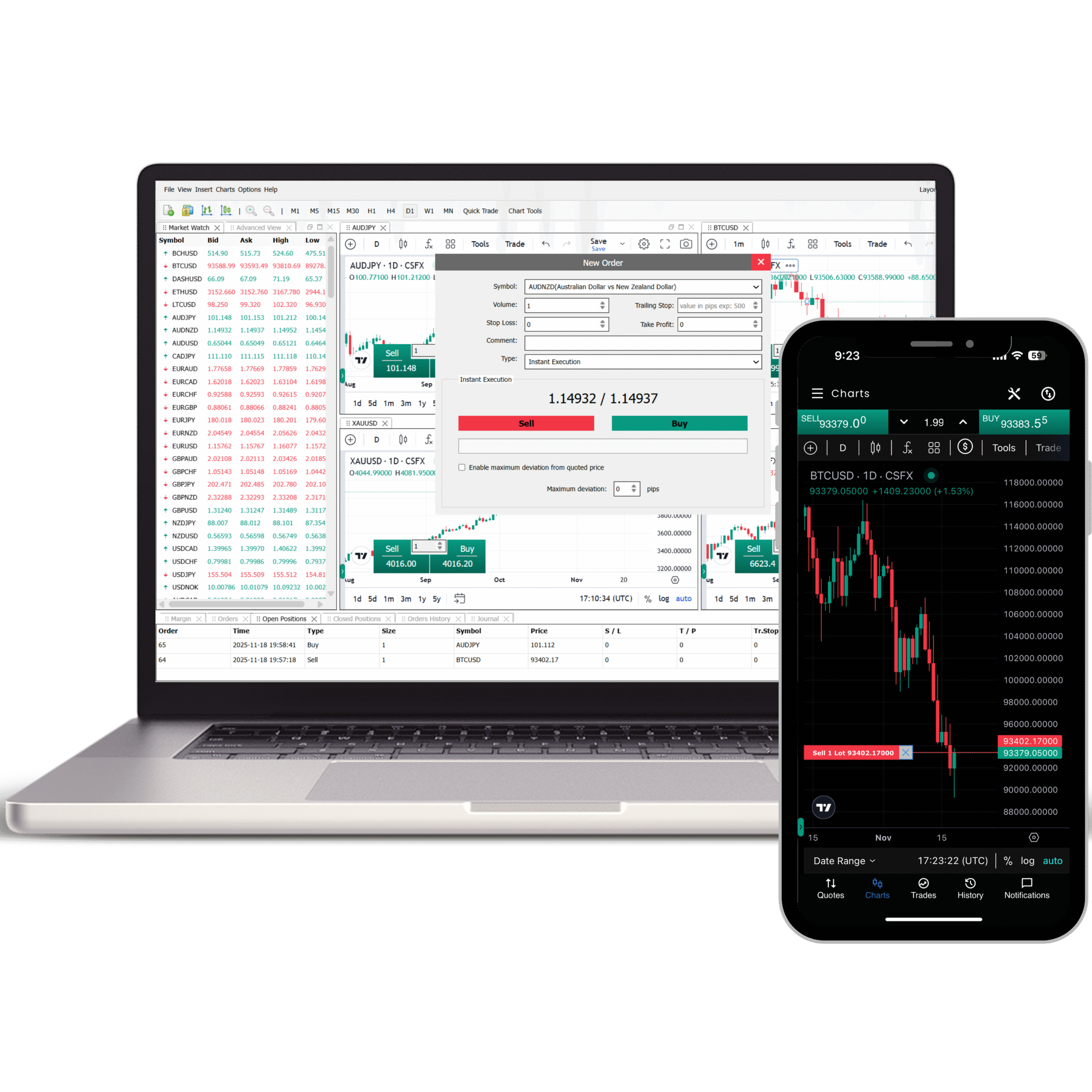
Fed Holds, Bitcoin Breaks & Iran Risk Bites Wall Street | Technical Analysis – US Session | 2 June 2026
Fed Holds, Bitcoin Breaks
& Iran Risk Bites Wall Street
Gold $4,527.6 · WTI $91.58 · BTC $69,476.70 · XRP $1.23 · US 30Y 4.98%
Full Trade Ideas · Technical Charts · Economic Calendar · U.S. Sector Themes · FAQ
The first full week of June arrives with a macro data barrage. Monday’s ISM Manufacturing PMI for May printed a surprisingly strong 54.0, rising from 52.7 and beating forecasts of 53 — the best factory reading since May 2022. New orders surged to 56.8 and production accelerated to 54.3. However, price pressures remain deeply elevated, with the ISM Prices Paid component at 82.1 — a level that all but precludes Federal Reserve rate cuts. The Fed’s policy rate stays at 3.50–3.75%; futures markets are pricing zero chance of a June cut and a meaningful probability of a 2026 hike.
Geopolitical stress dominates Tuesday’s session. Iranian state media confirmed Tehran has suspended communications with Washington in response to Israeli strikes in Lebanon over the weekend, reversing the ceasefire optimism that had briefly lifted risk assets in late May. President Trump stated talks are continuing, but market participants are treating the breakdown as bearish for risk. Oil prices are volatile — WTI is at $91.58 after touching $95 last week. Bitcoin has collapsed from a May 28 high of $74,000 to $69,476.70, and spot BTC ETFs have experienced a record-setting three consecutive weeks of outflows, with total assets under management falling from $148B to $141B.
The 30-year U.S. Treasury yield closed Monday at 4.975%, barely below the psychological 5% threshold. The yield curve has steepened notably — a combination of sticky inflation, higher-for-longer Fed expectations, and deficit concerns. Meta Platforms trades at $600.61 after pulling back from its $796 52-week high on broader tech sector multiple compression. This week also features the ADP Employment report (Wednesday) and the all-important BLS Non-Farm Payrolls (Friday), which will test whether the AI-driven rally still has legs.
Key Catalysts for Today’s Session
Live news flow driving price action as of 2 June 2026
U.S. Session Market Dashboard
Key levels across all asset classes at session open
USD/CAD & USD/CHF — U.S. Session Trade Setups
Entry · Stop Loss · Take Profit · Technical Analysis · Fundamental Context
Technical Analysis
USD/CAD is consolidating around 1.3815 after grinding higher from the 1.3580 April lows. The pair is caught between the 20-day EMA (rising, ~1.3750) and near-term resistance at 1.3840. A prior consolidation zone at 1.3790–1.3815 now acts as short-term support. The daily RSI is hovering near 54 — neither overbought nor oversold — with room to extend higher if the USD continues to gain on the ISM data momentum. A break and 4H close above 1.3840 opens the path to 1.3880–1.3920. The bearish scenario requires a sustained move below 1.3720, which would suggest CAD is finding footing from a stabilization in oil prices.
Fundamental Context
The Bank of Canada is widely expected to cut rates in H2 2026 — a policy divergence from the Federal Reserve, which is holding or tilting hawkish. WTI crude at $91.58 represents a meaningful headwind for the CAD (Canada is a major oil exporter), and the Iran risk narrative keeps oil price direction uncertain. Monday’s strong ISM Manufacturing data reinforced USD strength. Friday’s Non-Farm Payrolls is the critical binary risk event: a weak reading would be the first genuine argument for Fed cuts and would pressure USD/CAD back toward 1.3700.
Technical Analysis
USD/CHF has been in a structural downtrend since the 0.9200 highs of early 2026, and the current level of 0.7853 reflects a meaningful USD weakening against the Swiss franc. The 200-day SMA at ~0.7917 now acts as resistance. The 14-day RSI on the daily is at 55.55 — showing the recent bounce from lows but still below the overbought zone. Key support is at 0.7780 (May swing low), and a break below that level opens the door to 0.7700. Rallies to the 0.7900–0.7920 zone (200-day SMA) are selling opportunities as long as Iran risk-off sentiment persists.
Fundamental Context
The Swiss franc is the ultimate safe-haven currency, and Iran’s suspension of ceasefire talks is providing a direct tailwind for CHF. The Swiss National Bank has completed its easing cycle (policy rate at 0.25%) while the Fed is holding at 3.50–3.75% — but the rate differential is being overridden by geopolitical risk flows. Historically, CHF outperforms when Middle East tensions spike alongside oil price uncertainty. Friday’s US NFP print is the key near-term risk: a weak jobs number would simultaneously undermine USD and reinforce CHF safe-haven flows, accelerating the downtrend in USD/CHF.
Gold & Crude Oil — Trade Ideas
Dual commodity analysis under the Iran war and Fed policy cross-currents
Technical Analysis
Gold hit a 52-week high at $4,713 in mid-May before entering a corrective phase alongside rising U.S. real yields and a firmer USD. Today’s 0.74% decline in gold futures — to $4,527.6 — reflects classic “risk-off but USD-positive” dynamics: Iran tensions are normally gold-bullish, but the strong ISM data and higher-for-longer Fed narrative are temporarily supporting the dollar at gold’s expense. The $4,480–$4,500 zone is the technical bull-market support level (former resistance turned support, approximately the May 2 close). A sustained hold above $4,480 on daily close would confirm the dip is a buying opportunity targeting $4,650.
Fundamental Context
Gold has rallied dramatically in 2025–2026 on a combination of central bank buying, falling real rates, and geopolitical risk. The medium-term bull case remains intact: Iran war risk, Fed policy uncertainty, and global de-dollarization via central bank reserve diversification all support $4,700+ targets. Goldman Sachs and JPMorgan have year-end targets above $4,900. The short-term headwind is the USD’s firmness following the ISM beat. Friday’s NFP is the key event: a weak jobs number would be the catalyst for gold to bounce sharply from the $4,450 support zone and resume the uptrend.
Technical Analysis
WTI Crude has fallen 13.58% over the past month — from above $107 in early May to $91.58 today. The decline is the result of ceasefire optimism in late May briefly pushing prices lower, before Iran tensions re-escalated. The $88–$89 zone is a key technical support level: the late-April low and the point where buyers previously emerged. On the upside, resistance sits at $95–$96 (the breakdown level from the prior consolidation). Oil remains in a choppy, headline-driven $88–$96 range. A clean break above $96.50 on a 4H close would reinstate the uptrend toward $100+; a close below $88 would signal a deeper sell-off toward $83.
Fundamental Context
Iran’s suspension of ceasefire talks is the key headline for oil today. The Strait of Hormuz question remains unresolved — any disruption to that chokepoint (through which ~20% of global oil flows) would be a violent price catalyst to the upside. OPEC+ is watching carefully; Saudi Arabia has signaled willingness to adjust output. U.S. inventory data (API Wednesday, EIA Thursday) will provide additional near-term directional guidance. The broader macro narrative — sticky U.S. inflation fueled in part by elevated energy costs — means that oil above $95 directly complicates the Fed’s path and reinforces higher-for-longer policy expectations.
Dow Jones & Meta Platforms — Trade Ideas
Blue-chip index and mega-cap tech under AI spending and rate pressure
Technical Analysis
The Dow Jones nudged +46 points on Monday (close: 51,078) before futures sold off 0.46% overnight on Iran headlines and rising bond yields. The index is in a range between 50,000 (key psychological support) and 51,500 (near-term resistance). The 30-year Treasury yield approaching 5% is the most significant technical headwind: equity valuations are pressured when long-term discount rates approach this level. The VIX rising 4.77% to 16.05 signals that options markets are pricing increased uncertainty. A clean break below 50,500 on the cash index would trigger further selling toward the 50,000 level.
Fundamental Context
The Dow is composed of rate-sensitive industrials, financials, and healthcare names — all of which are directly impacted by the 30-year yield near 5%. Goldman Sachs and JPMorgan both flagged in May that 5%+ long-end yields would create valuation headwinds. The strong ISM Manufacturing print supports the industrial components, but the higher-for-longer Fed narrative offsets this. Friday’s NFP is the pivotal catalyst: a strong jobs number would extend the “higher-for-longer” narrative and pressure the Dow further; a weak number could trigger a relief rally in equities as rate cut bets return.
Technical Analysis
META is trading at $600.61, finding the lower end of today’s $597.20–$637.37 intraday range. The stock has pulled back nearly 25% from its $796.25 52-week high — a correction driven primarily by multiple compression as the 30Y yield approaches 5% rather than any fundamental deterioration. The $590–$600 zone aligns with the May structural support and the 100-day moving average. Trading volume today is 29.14M shares vs a 16.31M daily average — elevated turnover suggests institutional repositioning, not panic selling. A bounce from $590 targets a retest of $637, while a break below $580 would signal a deeper correction toward the $520 52-week low support.
Fundamental Context
Meta’s Q1 2026 results were genuinely strong: revenue of $56B (+33% YoY), operating margins of 41%, and nearly 4 billion monthly active users worldwide. However, CapEx guidance was raised to $135B (from $125B) as Zuckerberg accelerates AI infrastructure spending. Morningstar notes META is trading at a 344% premium to their fair value estimate. The AI spending narrative is double-edged: it drives the moat deeper, but near-term it compresses earnings. The upcoming Q2 earnings (late July) will be watched for any evidence that the advertising revenue growth is decelerating. At 21.83x P/E with 33% revenue growth, the valuation is not stretched by tech standards — but 30Y yields at 5% change the calculus.
US 30-Year Treasury — The 5% Battle Line
The most important technical and psychological level in global markets right now
Technical Analysis
The 30-year yield at 4.98% is 2.5bps from the critical 5.0% psychological threshold. This level matters because it is: (1) the 2025 high-yield zone, (2) a level at which institutional mandates historically begin selling equities to rebalance toward bonds, and (3) a level that triggers mortgage refinancing gridlock in the U.S. housing market. The yield has risen 0.977 percentage points from its September 2024 low of 3.936% and is up 0.522 points year-to-date. A push above 5.00% would be headline-generating and would pressure equities — particularly rate-sensitive sectors like utilities, REITs, and high-multiple tech like Meta.
Fundamental Context
Three factors are driving 30Y yields toward 5%: (1) the Fed’s higher-for-longer stance following the ISM Manufacturing beat and prior CPI/PPI upside surprises; (2) U.S. fiscal deficit concerns — the Congressional Budget Office has flagged structural deficits requiring additional Treasury issuance; and (3) geopolitical safe-haven rotation away from U.S. Treasuries toward physical gold and CHF, paradoxically. The 30Y yield is the key variable to watch for the rest of the week. A 5.0% print would reverberate across every asset class in this report: it is bearish for Dow Jones, bearish for META, bearish for Bitcoin, and could briefly pressure gold before the safe-haven bid overwhelms the real yield headwind.
Bitcoin & XRP — Crypto Under Iran Pressure
BTC breaks below $70K; XRP holds structure amid ETF outflow storm
Technical Analysis
Bitcoin has decisively broken below the $70,000 psychological support level — a level that had held for much of May. The intraday range today is $69,250–$72,814, and BTC is recovering slightly to $69,476.70. The breakdown from $73,000 on May 28 triggered a $1 billion liquidation cascade (93% long liquidations) and has now established a clear pattern of lower lows. The 30-day EMA is around $72,000 — now acting as resistance. A bounce toward $71,000–$71,500 is the optimal short entry zone; the downside target is $65,000 where the April 2026 support cluster lies. Volume at $22.83B is elevated — consistent with distribution, not accumulation.
Fundamental Context
Three bearish forces converge on BTC today: (1) Iran risk-off sentiment — CoinShares’ James Butterfill explicitly called this out as the dominant driver of $1.44B in weekly ETF outflows; (2) macro headwinds from the higher-for-longer Fed (Bitcoin is correlated with risk assets when real rates rise); and (3) Strategy’s first BTC sale in four years (32 BTC at ~$2.5M), which spooked accumulation-narrative bulls. The CLARITY Act regulatory progress (bullish) is being completely overshadowed. ETF total assets under management dropped from $148B to $141B — a $7B draw-down in three weeks. BTC needs a clean macro catalyst (weak NFP, Fed pivot hint) to reverse the trend.
Technical Analysis
XRP has formed a symmetrical triangle pattern on the daily chart, and price action since May suggests the pattern is breaking to the downside. At $1.23, XRP has broken below the lower compression boundary. The XRPL (XRP Ledger) continues to break transaction records and expand into real-world asset tokenization — but the price has disconnect, down 27% in Q1 2026 and a further 6.19% in May. The $227.10M in short liquidation leverage stacked against only $118M in fresh May ETF inflows creates an asymmetric setup: if shorts are squeezed, the move to $1.50+ could be violent. However, the path of least resistance without a macro catalyst remains lower toward $1.10.
Fundamental Context
XRP is caught between structurally positive fundamentals (XRPL activity booming, institutional tokenization interest, CLARITY Act progress) and deeply negative market sentiment driven by Iran geopolitical risk-off flows. May ETF inflows of $118M are a genuine positive signal — institutions are buying despite the price decline. CoinBase reports a striking contradiction: XRPL transaction volumes and tokenized asset activity are at all-time highs, yet the token is down 6% in May. This divergence between on-chain activity and price is a classic accumulation setup, but requires patient positioning. Near-term, Iran headlines and BTC’s direction will dominate.
“The 30-year yield approaching 5% is not just a bond market story — it is the single most important variable across every asset class this week. Equities, gold, Bitcoin, and the dollar will all reprice if that threshold breaks.” Capital Street FX Research · 2 June 2026
U.S. Session — Key Events This Week
High-impact data releases through the week of 2–6 June 2026 (All times ET)
| Time (ET) | Country | Event | Impact | Forecast | Prior | Actual |
|---|---|---|---|---|---|---|
| Mon Jun 1 · 10:00 | 🇺🇸USA | ISM Manufacturing PMI (May) | HIGH | 53.0 | 52.7 | 54.0 ✓ Beat |
| Tue Jun 2 · 10:00 | 🇺🇸USA | JOLTS Job Openings (Apr) | HIGH | 7.8M | 7.6M | Pending |
| Tue Jun 2 · 14:00 | 🇺🇸USA | Fed Beige Book | MEDIUM | — | — | Pending |
| Wed Jun 3 · 08:15 | 🇺🇸USA | ADP Employment Change (May) | HIGH | +130K | +62K | Pending |
| Wed Jun 3 · 10:00 | 🇺🇸USA | ISM Services PMI (May) | HIGH | 52.5 | 51.6 | Pending |
| Thu Jun 4 · 08:30 | 🇺🇸USA | Weekly Jobless Claims | MEDIUM | 230K | 227K | Pending |
| Thu Jun 4 · 10:30 | 🇺🇸USA | EIA Crude Oil Inventories | MEDIUM | −1.2M bbl | +2.4M bbl | Pending |
| Fri Jun 5 · 08:30 | 🇺🇸USA | Non-Farm Payrolls (May) ★ | HIGH | +120K | +53K | Pending — WEEK’S KEY RISK |
| Fri Jun 5 · 08:30 | 🇺🇸USA | Unemployment Rate (May) | HIGH | 4.3% | 4.3% | Pending |
Key Analyst Note: Friday’s Non-Farm Payrolls is the binary risk event of the week. A print above +150K would reinforce higher-for-longer Fed expectations, extending USD strength and pressuring gold and crypto. A print below +80K — particularly with rising unemployment — would be the first genuine catalyst for a Fed cut repricing and could trigger sharp reversals: USD/CAD lower, gold higher, BTC bounce, Dow relief rally. Position sizing into Friday should be reduced unless the trade rationale is explicitly NFP-directional.
Frequently Asked Questions
Context and clarity on today’s key market dynamics
U.S. Session Summary — 2 June 2026
Today’s U.S. session is defined by a rare convergence of geopolitical stress and macro data crosswinds. Iran’s suspension of ceasefire talks has injected genuine fear into risk markets: Bitcoin is below $70,000, the VIX is rising, gold is correcting toward strategic buy levels, and safe-haven flows are bidding CHF and pushing USD/CHF lower despite USD strength from the ISM beat.
The week’s narrative ultimately hinges on Friday’s Non-Farm Payrolls. The April print of +53K was a sharp labor market deceleration. If May continues the trend, the Federal Reserve’s higher-for-longer stance faces its first genuine credibility challenge. That would reprice rate cut odds, weaken the USD, bid gold and XRP’s positioning, and potentially trigger a Bitcoin relief rally from $69K. Conversely, a strong NFP (+150K+) cements the “no cuts in 2026” scenario and extends the pressure on all risk assets.
For tactical traders: USD/CHF short is the cleanest expression of Iran risk-off. Gold dip-buying at $4,450 is the medium-term high-conviction call. Bitcoin remains structurally compromised below $71,500; wait for a macro catalyst before pressing long. The 30-year Treasury at 5% is the single most important level to monitor across all asset classes.
Access Live Markets →