Dollar Index Stays Soft Ahead of Key US Economic Data
US Dollar Index Slips Toward Seven-Week Low as Markets Bet on Deeper Rate Cuts
Market Overview
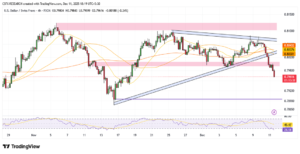
The US Dollar Index (DXY) is struggling to hold above the 98.00 level, hovering near its seven-week low of 98.13 set on Thursday. The greenback remains under sustained pressure as investors increasingly price in a more aggressive Federal Reserve easing cycle in 2026 than policymakers currently project.
The widening gap between market expectations and the Fed’s own guidance has become a key driver weighing on the dollar, pushing sentiment firmly bearish in recent sessions.
Rate-Cut Expectations Undermine the Dollar
Market pricing suggests investors believe the Fed will be forced to ease policy more than it currently signals. Traders now see a 58% probability of at least two rate cuts by October 2026, reflecting expectations that slowing growth and easing inflation will compel policymakers to act more decisively.
By contrast, the Fed’s most recent dot plot implies a more cautious path, with officials projecting the federal funds rate at 3.4% by the end of 2026—a trajectory consistent with just one additional cut next year. This disconnect has pressured US yields and eroded the dollar’s rate advantage.
Political Pressure Adds to Dovish Narrative
Further weighing on the dollar, President Donald Trump renewed calls for additional monetary easing following Wednesday’s 25-basis-point rate cut. White House officials indicated the president welcomed the move but believes more cuts are necessary to support economic growth.
While the Fed remains independent, ongoing political pressure reinforces market perceptions that the policy environment is turning increasingly accommodative.
Key Data in Focus: Nonfarm Payrolls and Retail Sales
Looking ahead, attention turns to a critical batch of US economic data that could shape near-term dollar direction. The November Nonfarm Payrolls report, due Tuesday, will be closely scrutinized for signs of labor-market cooling or resilience.
Also on tap are Retail Sales figures and preliminary S&P Global PMI data for December, which should provide fresh insight into consumer demand, business activity, and overall economic momentum. Strong data could offer the dollar temporary relief, while any downside surprises may deepen selling pressure.
Technical and Market Outlook
From a technical perspective, the DXY’s inability to reclaim the 98.50–99.00 zone keeps the downside bias intact. A sustained break below 98.00 could open the door toward deeper losses, while any rebound is likely to face resistance as long as rate-cut expectations remain elevated.
Summary
The US Dollar Index remains under pressure near multi-week lows as markets price in a more aggressive Fed easing cycle than officials currently forecast. Diverging expectations between investors and policymakers, renewed political calls for rate cuts, and falling yields continue to weigh on the greenback. With key US data due in the coming days, the dollar’s next move will depend on whether economic momentum can challenge the growing conviction that deeper rate cuts lie ahead.
FAQ
1. Why is the US Dollar Index weakening?
The dollar is under pressure because markets expect more interest rate cuts in 2026 than the Federal Reserve currently signals, reducing the currency’s yield advantage.
2. What is the Fed projecting for 2026 rates?
The Fed’s dot plot suggests the policy rate will fall to around 3.4% by the end of 2026, implying only one additional rate cut next year.
3. What are markets expecting instead?
Traders see a strong probability of at least two rate cuts through October 2026, reflecting expectations of slower growth and easing inflation.
4. How could upcoming US data affect the dollar?
Stronger-than-expected payrolls or retail sales could support the dollar, while weak data would likely reinforce bearish sentiment.
5. What level is key for DXY traders right now?
The 98.00 level is a critical support area. A sustained break below it could signal further downside in the near term.
Disclaimer: This article is for informational purposes only and does not constitute financial, investment, or trading advice. Market conditions can change rapidly, and readers should conduct their own research or consult a qualified financial professional before making investment decisions.