US Private Job Growth Misses Forecasts as ADP Signals Cooling
US Private Job Growth Misses Forecasts as ADP Signals Cooling Labor Momentum
Market Overview
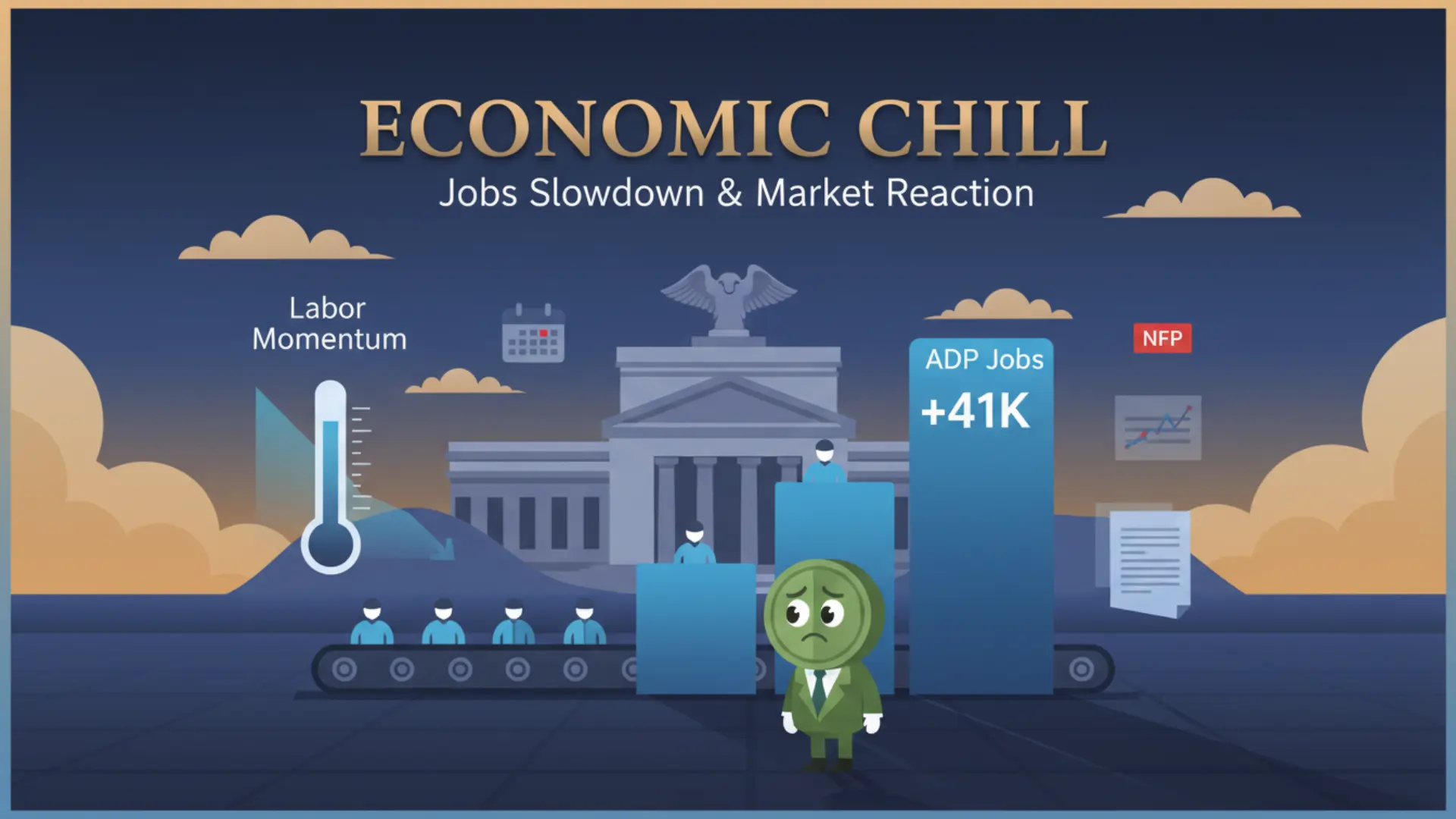
US private sector hiring showed modest improvement in the latest ADP National Employment Report, but the pace of job creation failed to meet market expectations. According to the report, private employers added 41,000 jobs in the most recent period, undershooting forecasts for a 49,000 gain. While the return to positive job growth marks a clear rebound from the prior month’s revised decline of 32,000 jobs, the softer-than-expected figure suggests the US labor market is continuing to cool rather than reaccelerate.
Markets interpreted the data as a sign that employment conditions remain resilient but uneven, reinforcing the narrative of a gradually slowing economy rather than an abrupt downturn.
Labor Market Signals and Economic Context
The ADP report, which draws on payroll data from roughly 400,000 US businesses, is closely watched as an early signal ahead of the official Nonfarm Payrolls release. This latest reading indicates that employers are still hiring, but at a cautious pace, reflecting tighter financial conditions, lingering cost pressures, and uncertainty around future demand.
The improvement from last month’s contraction points to stabilization in private sector employment, yet the miss versus expectations highlights that momentum is not strong enough to fully dispel concerns about slowing growth. For policymakers and investors alike, the data underscores a labor market that is gradually losing heat without showing signs of outright weakness.
US Dollar and Market Reaction
In currency markets, the US Dollar Index showed limited reaction, with traders weighing the mixed implications of the ADP data. Historically, stronger-than-expected ADP readings tend to support the US dollar by reinforcing expectations for tighter monetary policy, while weaker outcomes can weigh on the greenback.
This report landed somewhere in between. The return to positive job growth offered some reassurance, but the shortfall relative to forecasts introduced mild downward pressure on the dollar as traders reassessed the likelihood of future Fed rate cuts. The data did little to shift broader market pricing, which continues to reflect expectations that the Federal Reserve will remain cautious as inflation eases and growth moderates.
Fed Policy Implications
From a monetary policy perspective, the ADP report supports the Federal Reserve’s recent messaging that the labor market is gradually rebalancing. Fed officials have emphasized the need to see continued cooling in employment conditions without a sharp rise in unemployment. This data aligns with that narrative, suggesting the economy is moving closer to the Fed’s desired soft-landing scenario.
However, the uneven pace of hiring also reinforces why policymakers are reluctant to declare victory. A sustained slowdown in job creation could strengthen the case for Fed rate cuts later this year, particularly if upcoming data confirms softer wage growth and easing inflation pressures.
What Traders Are Watching
- The upcoming US Nonfarm Payrolls report for confirmation or divergence from the ADP signal
- Wage growth and unemployment data for clues on labor market slack
- Federal Reserve commentary on whether cooling jobs data alters the policy outlook
- Near-term direction in the US Dollar Index as rate-cut expectations evolve
Summary
The latest ADP employment report paints a picture of a US labor market that is stabilizing but losing momentum. While private employers returned to modest hiring after last month’s decline, job growth fell short of expectations, reinforcing concerns about a gradual economic slowdown. For markets, the data keeps the focus firmly on upcoming labor and inflation reports, with traders looking for clearer signals on when—and how aggressively—the Federal Reserve may begin cutting interest rates.
Frequently Asked Questions (FAQ)
What is the ADP National Employment Report?
The ADP report measures monthly changes in US private sector employment using payroll data and is often seen as a preview of the official Nonfarm Payrolls report.
Why did markets react cautiously to the latest ADP data?
Although job growth returned to positive territory, the number missed expectations, suggesting slower momentum and limiting optimism about economic strength.
How does ADP data affect the US dollar?
Stronger-than-expected job growth typically supports the dollar by reducing rate-cut expectations, while weaker data can weigh on it by increasing the likelihood of easing.
Does this report change expectations for Fed rate cuts?
On its own, the report does not significantly alter expectations, but it supports the view that the Fed has room to consider rate cuts if cooling trends continue.
How reliable is ADP compared to Nonfarm Payrolls?
ADP is considered a useful leading indicator, but it can be volatile and does not always align closely with the official government jobs report.
Disclaimer:
This article is for informational purposes only and does not constitute investment advice. Financial markets involve risk, and readers should conduct their own research or consult a qualified financial professional before making trading or investment decisions.