US Dollar Weekly Forecast: Fed Caution and Political Risk.
US Dollar Weekly Forecast: Fed Caution Meets Rising Political Uncertainty
Market Overview: Dollar Volatility Returns as Policy and Politics Collide
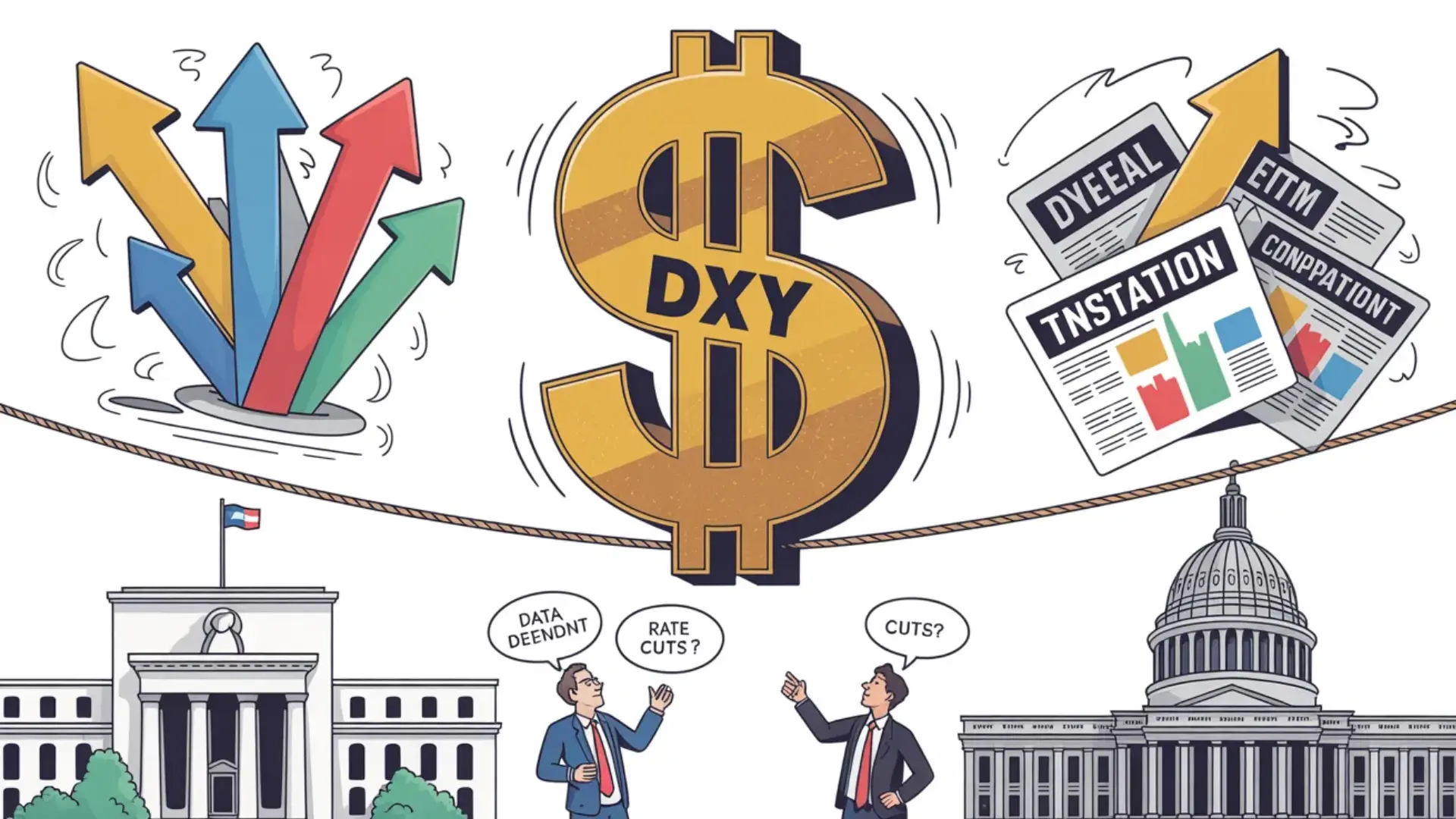
The US Dollar Index (DXY) endured another volatile week as traders digested a mix of Federal Reserve caution, shifting rate expectations, and renewed political uncertainty. The greenback initially extended its recent downtrend, sliding toward levels not seen since early 2022, before stabilizing late in the week following fresh developments in Washington.
Sentiment shifted after President Donald Trump announced his intention to nominate Kevin Warsh as the next Federal Reserve Chair. The move surprised markets and sparked speculation about a potentially more hawkish policy bias in the future, helping the dollar recover part of its earlier losses. Still, the rebound lacked conviction, underscoring the fragile confidence underpinning the US Dollar Index as investors remain focused on the timing and scale of future Fed rate cuts.
Federal Reserve Holds Steady, Signals Patience
As widely expected, the Federal Reserve left interest rates unchanged at its January policy meeting, maintaining the fed funds target range at 3.50%–3.75%. Chair Jerome Powell struck a balanced tone, acknowledging continued progress on inflation while stressing that the current policy stance remains appropriate given ongoing economic resilience.
Powell emphasized that inflation pressures have eased, particularly in services, and noted signs of stabilization in the labor market. However, he reiterated that policy decisions will remain data-dependent and assessed meeting by meeting. Importantly for markets, Powell made clear that rate hikes are not the base case, while also pushing back against expectations for rapid or aggressive easing.
The Fed chair also highlighted the impact of tariff-related price pressures on recent inflation readings, suggesting these effects may peak later this year. That nuance reinforced the central bank’s cautious posture and helped temper near-term rate cut speculation.
A Divided Fed Complicates the Outlook
Comments from Fed officials throughout the week revealed a growing divergence within the committee, reflecting competing concerns about inflation persistence and labor market cooling. Some policymakers appear increasingly confident that inflation is no longer the dominant risk, while others warn that delaying action could leave the Fed behind the curve if growth weakens more sharply.
Stephen Miran argued that inflation is no longer a pressing concern, downplaying recent strength in producer prices and minimizing the longer-term inflationary effects of tariffs. He renewed calls for continued balance sheet reduction, advocating further quantitative tightening even as rate cuts remain under discussion.
By contrast, Christopher Waller struck a more urgent tone, explaining his dissent in favor of a 25-basis-point rate cut. Waller warned that recent labor market data point to a genuine risk of a sharper slowdown in hiring, suggesting policy may already be restrictive enough.
Taking a more cautious middle ground, Raphael Bostic maintained that inflation remains above target and has shown limited progress over the past two years. While he does not expect a renewed acceleration in price pressures, he warned that inflation could remain stubborn, supporting a patient approach and weakening the case for near-term rate cuts.
These conflicting signals highlight a Federal Reserve increasingly divided on how quickly policy should ease, adding uncertainty to the outlook for the US Dollar Index.
Inflation Data Supports Cuts — But Not Urgency
Recent US inflation data largely met expectations, reinforcing the broader disinflation narrative without offering a decisive catalyst for policy change. December’s Consumer Price Index showed headline inflation holding at 2.7% year-on-year, while core inflation eased modestly to 2.6%.
While these figures support expectations for rate cuts later this year, they also validate the Fed’s cautious stance. Several officials continue to emphasize that inflation remains above the 2% target, and recent producer price data suggest underlying pressures may not be easing as quickly as markets anticipate.
As a result, the gap between market pricing and Fed guidance remains a key source of volatility for the US dollar.
What Traders Are Watching Next
- The upcoming Nonfarm Payrolls report, which could reshape expectations around labor market resilience and policy easing
- Additional commentary from Federal Reserve officials following the January meeting
- Treasury yield movements, particularly at the front end of the curve
- Ongoing political developments that could influence perceptions of future Fed independence
- Risk sentiment across equity and credit markets, which continues to affect dollar demand
US Dollar Outlook: Volatility Likely to Persist
Looking ahead, the US Dollar Index is likely to remain sensitive to incoming economic data and policy signals. While markets continue to anticipate rate cuts later this year, the Fed’s data-dependent approach and internal divisions suggest the path toward easing will be uneven.
A softer labor market or downside surprises in growth data could renew downside pressure on the dollar, while any signs of persistent inflation or more hawkish policy rhetoric may trigger corrective rebounds. With political uncertainty adding another layer of complexity, dollar traders should brace for continued volatility in the weeks ahead.
Summary
The US dollar’s performance this week reflected the growing tension between market expectations for rate cuts and a Federal Reserve intent on moving cautiously. Mixed inflation signals, diverging views among policymakers, and unexpected political developments combined to keep the US Dollar Index under pressure. As attention shifts toward key labor market data and further Fed commentary, the dollar’s near-term direction will depend on whether economic evidence aligns with the market’s easing narrative or reinforces the Fed’s patient stance.
FAQs
What is the US Dollar Index (DXY)?
The US Dollar Index tracks the value of the US dollar against a basket of major global currencies, serving as a benchmark for overall dollar strength.
Why does Federal Reserve policy matter for the dollar?
Interest rate expectations influence capital flows. Higher rates tend to support the dollar, while anticipated rate cuts can weaken it.
How does political uncertainty affect the US dollar?
Political developments can alter perceptions of policy stability and economic outlook, increasing volatility and impacting currency valuations.
Which data points matter most for dollar traders?
Nonfarm payrolls, inflation data, Treasury yields, and Fed commentary are among the most influential drivers of dollar movement.
Can a weaker dollar be positive for the US economy?
A weaker dollar can support exports and corporate earnings but may also increase import costs and inflation pressures.
Disclaimer:
This article is for informational purposes only and does not constitute financial, investment, or trading advice. Market conditions can change rapidly, and past performance is not indicative of future results. Readers should conduct their own research or consult a qualified financial professional before making any investment decisions.