Forex Market Analysis — March 12, 2026 | EUR/USD, GBP/USD, USD/CAD, NZD/USD Daily Briefing
Forex Market Analysis
March 12, 2026

EUR/USD · GBP/USD · USD/CAD · NZD/USD · Full Technical, Fundamental & Trade Setup Coverage
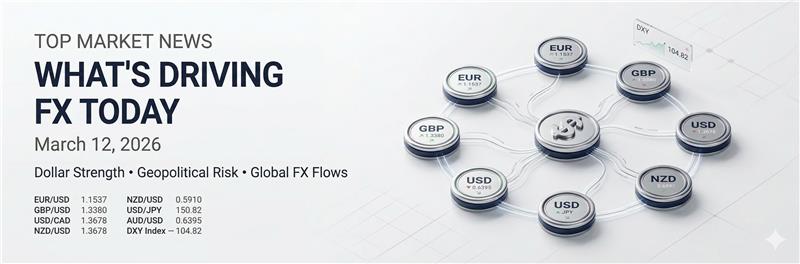
Top Market News — What’s Driving FX Today
The global foreign exchange market enters Thursday, March 12 under a familiar cloak of cautious optimism disrupted by stubborn geopolitical overhang. The US Dollar continues its paradoxical role — simultaneously a structurally weakening reserve currency and the world’s preferred safe-haven in a Middle East risk-off storm. Here is what experienced traders need to know right now.
| Story | Impact | Currency Effect | Priority |
|---|---|---|---|
| US CPI Feb: 2.4% YoY (in-line) Released March 11. Core CPI steady. Markets price two Fed cuts in 2026, June first 25bp. FOMC Minutes due Thursday/Friday. |
🔴 HIGH | USD mildly bearish medium-term · EUR/USD, GBP/USD beneficiaries on rate cut repricing | ★★★★★ |
| US Unemployment Claims (weekly) Expected today at 13:30 GMT. Prior: 223K. Consensus: ~220K. A miss could accelerate June cut pricing. |
🔴 HIGH | USD directional · miss = USD sell · beat = USD bounce | ★★★★★ |
| Middle East: Hormuz Disruption Ongoing Geopolitical risk premium remains elevated following US-Israeli strikes on Iran (Feb 28). Iranian navy warnings in Strait of Hormuz continue. WTI hovering near $88. |
🔴 HIGH | Safe-havens bid (USD, JPY, CHF) · CAD supported via oil · NZD/AUD pressured | ★★★★★ |
| FOMC Minutes — Policy Tone Watch Markets scrutinise consistency of Fed communication post-CPI print. Kevin Warsh expected as next Fed Chair in June. Any hint of earlier/later cuts than June will move DXY significantly. |
🔴 HIGH | USD-sensitive across all major pairs (50–120 pip move potential) | ★★★★☆ |
| UK GDP Monthly (Jan 2026) Data expected today. UK unemployment climbed to 5.2% in Q1 2026. BoE in gradual easing mode (Bank Rate: 3.75%). MPC member Taylor warning of “deficient demand” risks. |
🟠 MEDIUM | GBP/USD directional · weak GDP = cable sell-off below 1.33 | ★★★★☆ |
| ECB’s Lagarde — Calm But Cautious Tone ECB paused easing in H2 2025. Inflation near 1.9% target. Lagarde: “Not targeting the exchange rate.” Germany’s €1 trillion fiscal package supports Eurozone growth. |
🟠 MEDIUM | EUR broadly supported medium-term · short-term EUR/USD capped by USD safe-haven | ★★★☆☆ |
| BoJ: Policy Normalisation Continuing BoJ hiked 25bp in December 2025 (second hike since 2007). JGB tapering pace reducing from Q2 2026. JPY structurally supported; intervention risk above 160.00 USD/JPY. |
🟠 MEDIUM | JPY broadly bid · USD/JPY capped · indirectly supports risk-off positioning | ★★★★☆ |
| China: NPC Fiscal Targets — 5% GDP Goal China kept GDP target at ~5% for 2026. Fiscal deficit widened to 4.0–4.5% of GDP. Section 122 tariff (10%) replaces IEEPA tariff after Supreme Court ruling. CNY relatively stable. |
🔵 LOW-MED | NZD/AUD mildly supported via China demand stabilisation expectations | ★★★☆☆ |
| Australia: RBA Hawkish Tilt Noted RBA’s hawkish posture in latest communications. Oil-driven inflation adding to RBNZ rate hike bets in NZ for 2026. AUD/NZD markets watching domestic CPI implications. |
🔵 LOW-MED | AUD and NZD supported on rallies; both still under USD safe-haven pressure | ★★★☆☆ |
| Canada: Oil Surplus & USMCA Review CAD crude production set for 5.8mb/d in 2026 (+18%). Oil trade surplus could match 2022 record. USMCA review uncertainty adds near-term downside risk to CAD despite oil tailwinds. |
🟠 MEDIUM | USD/CAD complex crosscurrents: oil bullish CAD; USMCA / BoC-Fed divergence bearish CAD | ★★★★☆ |
Central Bank Policy Watch
Structural FX trends in 2026 are anchored in one theme: divergence. Understanding exactly where each major central bank sits in its cycle is the bedrock of every directional trade.
| Central Bank | Country / Currency | Current Rate | Stance | Next Move | FX Implication |
|---|---|---|---|---|---|
| Federal Reserve (Fed) | USA / USD | 3.50–3.75% |
CAUTIOUS DOVISH | 25bp cut — June 2026 | Structurally USD bearish medium-term; short-term safe-haven support |
| European Central Bank (ECB) | Eurozone / EUR | 3.15% |
PAUSE / HOLD | Hold March; possible cut H2 | EUR broadly supported; Germany fiscal stimulus adds fundamental upside |
| Bank of England (BoE) | UK / GBP | 3.75% |
GRADUAL EASING | Further cuts; pace uncertain | GBP under structural pressure; underperforms EUR peers in 2026 |
| Bank of Japan (BoJ) | Japan / JPY | 0.75% |
NORMALISING | Gradual hikes; JGB taper | JPY structurally bid; USD/JPY pressured below 155.00 zone |
| Reserve Bank of Australia (RBA) | Australia / AUD | 3.85% |
HAWKISH TILT | Possible hike if oil-CPI persists | AUD supported on dips; oil inflation complicates outlook |
| Reserve Bank of NZ (RBNZ) | New Zealand / NZD | 4.25% |
REASSESSING | Rate hike bets building for 2026 | NZD mildly supported; domestic inflation from oil adding complexity |
| Bank of Canada (BoC) | Canada / CAD | 2.75% |
PAUSE / WAIT | Easing cycle ongoing; potential pause H1 | CAD pressured by BoC-Fed divergence; oil counters the trend |
| People’s Bank of China (PBoC) | China / CNY | 3.10% (LPR) |
STABLE / SUPPORTIVE | Mild stimulus if growth falters | CNY relatively stable; Section 122 tariff limits appreciation |
Economic Calendar — Next 24 Hours
All times GMT. Only HIGH and significant MEDIUM impact events from USA, UK, Japan, Australia, Europe, and China are shown. Any deviation from consensus can trigger 50–150 pip moves in the relevant pairs. Manage position sizing accordingly around these releases.
| GMT | Country | Event | Previous | Forecast | Impact | Primary Pair Affected |
|---|---|---|---|---|---|---|
| 00:30 | 🇦🇺 Australia | Employment Change (Feb) | 44.0K | 20.0K | HIGH | AUD/USD · NZD/USD (correlation) |
| 00:30 | 🇦🇺 Australia | Unemployment Rate (Feb) | 4.1% | 4.1% | HIGH | AUD/USD · pairs with AUD |
| 03:00 | 🇨🇳 China | Retail Sales YoY (Jan–Feb) | 3.7% | 4.2% | MEDIUM | NZD/USD · AUD/USD · risk sentiment |
| 03:00 | 🇨🇳 China | Industrial Production YoY (Jan–Feb) | 5.8% | 5.9% | MEDIUM | Commodity-linked FX · NZD/USD |
| 07:00 | 🇬🇧 UK | GDP Monthly (Jan 2026) | +0.4% | +0.1% | HIGH | GBP/USD · EUR/GBP |
| 07:00 | 🇬🇧 UK | Manufacturing Production MoM (Jan) | −0.5% | +0.2% | MEDIUM | GBP/USD |
| 07:00 | 🇬🇧 UK | Trade Balance (Jan 2026) | −£14.2B | −£14.0B | MEDIUM | GBP broad |
| 10:00 | 🇪🇺 Eurozone | Industrial Production MoM (Jan) | +0.8% | +0.5% | MEDIUM | EUR/USD · EUR crosses |
| 12:30 | 🇺🇸 USA | Initial Jobless Claims (w/e Mar 7) | 223K | 220K | HIGH | USD broad · EUR/USD · GBP/USD · USD/CAD |
| 12:30 | 🇺🇸 USA | PPI Final Demand MoM (Feb) | +0.4% | +0.3% | HIGH | USD · reinforces/counters CPI narrative |
| 12:30 | 🇺🇸 USA | Core PPI YoY (Feb) | 3.6% | 3.5% | HIGH | USD broad · all major pairs |
| TBC | 🇺🇸 USA | FOMC Minutes (Feb meeting) | — | — | HIGH | USD broad — 80–150 pip risk event |
| 23:50 | 🇯🇵 Japan | PPI YoY (Feb) | 4.2% | 3.9% | MEDIUM | USD/JPY · JPY crosses |

Technical Analysis & Trend
EUR/USD has broken decisively below the critical Target Zone 2 at 1.1650–1.1628, now trading at 1.1537 as of this morning’s Asian open. This breakdown confirms a short-term downtrend that took hold last week, with all 12 major moving averages on the daily chart aligned in a bearish sequence — a rare and significant alignment that veteran traders treat with respect. The pair attempted a recovery rally toward the 55-day SMA at 1.1770 but found sellers waiting at that zone, with the mid-week session printing a textbook rejection candle.
From a structural perspective, EUR/USD peaked near the $1.22 resistance level — a key Fibonacci zone — before beginning its gradual descent. The underlying fundamentals remain constructive medium-to-long term: Germany’s €1 trillion fiscal stimulus package, ECB inflation back near target at 1.9%, and two anticipated Fed rate cuts in 2026 all support eventual EUR recovery. However, geopolitical risk premium and the USD’s short-term safe-haven demand are capping upside in the near term.
BEARISH ENGULFING SHOOTING STAR (March 10) THREE BLACK CROWS (Weekly) INSIDE BAR CONTINUATION
The daily chart shows a bearish engulfing pattern forming at the 1.1650 resistance — a classically bearish signal that confirmed the breakdown below Target Zone 2. The H4 chart has printed three consecutive lower-close candles with compressed upper wicks, characteristic of institutional selling. Watch for a potential Doji or Hammer near 1.1520 as first warning of exhaustion and possible counter-rally.
Key Levels
| Level Type | Price | Significance |
|---|---|---|
| 🔴 Resistance 3 | 1.1900 | Major structural ceiling / Jan 2026 high zone |
| 🔴 Resistance 2 | 1.1760 | 55-Day SMA / prior support now resistance |
| 🔴 Resistance 1 | 1.1650–1.1628 | Broken Target Zone 2 → now resistance |
| 📍 Current Price | 1.1537 | As of 07:00 GMT — below all key resistance zones |
| 🟢 Support 1 | 1.1520–1.1500 | Key psychological + prior Q4 support zone |
| 🟢 Support 2 | 1.1412 | 200-Day SMA — critical long-term floor |
| 🟢 Support 3 | 1.1200–1.1150 | H2 2025 consolidation range bottom |
Trade Setup — Next 24 Hours
EUR/USD failed to reclaim 1.1628–1.1650. Any intraday bounce into this former support zone — now resistance — presents a high-probability short opportunity. PPI and Jobless Claims at 12:30 GMT will be the catalyst. A USD-strong surprise (lower claims, higher PPI) validates this setup immediately.
If 1.1500 holds and a bullish reversal candle (Hammer or Bullish Engulfing) prints on the daily chart, a corrective long toward 1.1628 becomes viable. This is a lower-probability trade — only for traders comfortable with counter-trend entries on confirmed reversal signals. FOMC Minutes would need to skew dovish to fuel this move.

Technical Analysis & Trend
Cable has pulled back meaningfully from its recent 42-day high above 1.3787, now trading at 1.3380. Despite this correction, the structural integrity of GBP/USD’s medium-term bullish trend remains unbroken — the golden cross between SMA50 and SMA200 still holds, and the pair has not violated the critical 1.3641 support level that institutional traders are watching as the line in the sand for the bullish thesis.
The pair’s current position at the 61.8% Fibonacci retracement of the 1.2642–1.3901 swing represents a technically significant zone. J.P. Morgan’s March 2026 target of 1.39 aligns with the 100% Fibonacci projection — suggesting that if the macro narrative cooperates (Fed cutting, BoE pausing), cable could rebuild toward 1.3900. The primary near-term risk is the UK GDP release at 07:00 GMT today; a weak print could accelerate the sell-off toward 1.3300–1.3280.
BEARISH HARAMI (H4) EVENING STAR (Daily, Mar 10) DESCENDING CHANNEL (H4) DOJI AT RESISTANCE (1.3780 level)
The daily chart’s Evening Star formation at the recent high near 1.3787 is a textbook reversal pattern — three-candle bearish signal where a Doji forms between a bullish and a large bearish candle. This pattern, combined with the descending channel on H4, signals short-term continuation lower before the structural bull trend reasserts itself. Key watch: a Bullish Piercing Line or Morning Star near 1.3350–1.3300 would be the alert to flip long.
Key Levels
| Level Type | Price | Significance |
|---|---|---|
| 🔴 Resistance 3 | 1.3901 | 100% Fibonacci projection — medium-term target |
| 🔴 Resistance 2 | 1.3787 | 2025 high / recent 42-day high — breakout zone |
| 🔴 Resistance 1 | 1.3492 | 50-Day SMA — immediate overhead resistance |
| 📍 Current Price | 1.3380 | Trading in the 61.8% Fibonacci retracement zone |
| 🟢 Support 1 | 1.3350–1.3300 | H4 channel support / near-term buyers’ zone |
| 🟢 Support 2 | 1.3641 | Critical structural support — bull thesis failure below |
| 🟢 Support 3 | 1.3200–1.3150 | Major demand zone / 200-day SMA area |
Trade Setup — Next 24 Hours
GBP/USD remains the most structurally sound long on USD weakness scenarios among G10 pairs. The buy-the-dip zone at 1.3350–1.3300 offers an attractive risk/reward for traders who accept near-term volatility. Wait for a confirmed reversal candle (Hammer or Engulfing) before entering. UK GDP data at 07:00 GMT is the key trigger — any upside surprise will accelerate the recovery.
If UK GDP disappoints today and GBP/USD fails to hold 1.3380, a sell-on-bounce into the 1.3420–1.3440 zone (former support now resistance) targets the 1.3300 zone. This setup aligns with the descending H4 channel and the BoE’s dovish path. Tight stop above 1.3492 (50 SMA).

Technical Analysis & Trend
USD/CAD is one of the most complex pairs to trade right now, caught in a tug-of-war between two powerful and opposing forces. On one side, elevated WTI crude oil prices near $88 are fundamentally supportive of the Canadian dollar — Canada’s crude production is on track for a record 5.8 million barrels per day in 2026, meaning the oil trade surplus could match or exceed the 2022 record. Higher oil = structurally stronger CAD = lower USD/CAD.
On the other side, USMCA review uncertainty and the Bank of Canada’s ongoing easing cycle (policy rate at 2.75% versus the Fed’s 3.50–3.75%) create a yield differential that supports USD/CAD. The technical picture tells a similar story of indecision: the pair was rejected at upper channel resistance for the second consecutive week, and the Death Cross (SMA50 below SMA200) confirms medium-term bearish pressure on USD/CAD. However, the short-term price action shows the pair bouncing at the 1.3630 channel floor, now nudging back toward 1.3680–1.3700.
DOUBLE TOP (1.3750–1.3755) BULLISH HAMMER (H4, Mar 11) SPINNING TOPS (indecision) ASCENDING TRIANGLE (H1)
The weekly chart shows a confirmed Double Top near 1.3750–1.3755 — a classically bearish reversal pattern suggesting the medium-term path is lower for USD/CAD. However, the H4 chart’s Bullish Hammer on March 11 near 1.3630 signals short-term buyers defending that level. The Ascending Triangle on H1 suggests a potential intraday break higher before the larger bearish pattern dominates.
Key Levels
| Level Type | Price | Significance |
|---|---|---|
| 🔴 Resistance 3 | 1.3820 | Major channel ceiling / 2026 highs zone |
| 🔴 Resistance 2 | 1.3750–1.3755 | Double Top neckline — bearish beyond here |
| 🔴 Resistance 1 | 1.3720–1.3740 | SMA 50 / recent rejection zone |
| 📍 Current Price | 1.3678 | Bouncing within ascending triangle H1 |
| 🟢 Support 1 | 1.3630–1.3620 | H4 Hammer low / ascending channel floor |
| 🟢 Support 2 | 1.3560 | Key structural support — SMA200 zone |
| 🟢 Support 3 | 1.3420–1.3400 | Major demand area — oil-driven CAD accumulation |
Trade Setup — Next 24 Hours
The Double Top confirmed at 1.3750 signals that USD/CAD’s medium-term path is lower, driven by elevated oil prices and Canada’s record production trajectory. Any intraday rally toward 1.3720–1.3740 (prior broken support, 50-SMA zone) is a short opportunity. Weak US PPI or Jobless Claims data will accelerate this setup.
The H1 ascending triangle suggests a potential intraday break above 1.3695–1.3700. A confirmed break with volume — catalysed by strong US PPI or Claims data — could see a quick push to 1.3740 resistance. This is a short-term scalp/intraday play only, not aligned with the medium-term bearish USD/CAD view.

Technical Analysis & Trend
NZD/USD is the most nuanced and technically balanced pair in today’s analysis. The daily timeframe presents a genuinely neutral signal — with exactly 6 buy and 6 sell signals across 12 major moving averages — which in itself is a trading signal: the pair is at an inflection point. Fibonacci pivot at 0.5916 sits almost exactly at the current market price, reinforcing that a decisive break either way will define the next directional move.
What makes NZD/USD interesting today is the confluence of RBNZ rate hike bets building for 2026 (oil-driven domestic inflation pushing policymakers hawkish), China’s stabilising growth data (New Zealand’s largest trading partner), and Australia’s employment data at 00:30 GMT (which correlates strongly with NZD pairs). The weekly chart — rated a Strong Buy — suggests medium-term demand remains intact. Oil’s elevation above $85 actually supports RBNZ hawkishness, which adds a positive carry dynamic to NZD.
INSIDE BAR CONSOLIDATION (Daily) BULLISH MARUBOZU (Weekly) DOJI CLUSTER (H4, 3 consecutive) HAMMER (H1, Mar 12 Asian)
The daily chart’s Inside Bar pattern signals consolidation before continuation. Given the weekly Marubozu (full-body bullish candle with no wicks indicating strong conviction) and a Hammer forming in the Asian session today near 0.5900, the weight of pattern evidence slightly favours a bullish resolution. However, the three consecutive H4 Doji candles signal that neither bulls nor bears are in control — the market is waiting for a catalyst (China data, Australian employment, or US PPI) before committing.
Key Levels
| Level Type | Price | Significance |
|---|---|---|
| 🔴 Resistance 3 | 0.6100 | Major psychological level / 2025 range top |
| 🔴 Resistance 2 | 0.6055 | Key swing high — sellers emerged twice here |
| 🔴 Resistance 1 | 0.5973–0.6001 | Upper pivot zone / near 0.60 psychological |
| 📍 Current Price | 0.5910 | At Fibonacci pivot — decision zone |
| 🟢 Support 1 | 0.5900–0.5893 | Intraday floor / Hammer formation zone |
| 🟢 Support 2 | 0.5830 | Strong demand zone — multiple rejections |
| 🟢 Support 3 | 0.5760–0.5750 | Major structural low — bull market invalidation |
Trade Setup — Next 24 Hours
If Chinese Retail Sales and Industrial Production at 03:00 GMT beat consensus, and Australian employment at 00:30 GMT surprises positively, NZD/USD has the catalysts to break above 0.5930 (50 SMA) and target 0.5973–0.6001. Entry on confirmed Asian session Hammer hold above 0.5900, with a stop just below the overnight low. Weekly bias supports this direction.
If risk sentiment deteriorates (further Hormuz headlines, US PPI strong, USD bid) and NZD/USD breaks below 0.5900, a quick move toward 0.5830 support is probable. The 5H Strong Sell signal and geopolitical risk-off environment support this scenario. Short only on a confirmed bearish break and close below 0.5900.
Master Trade Summary — All Four Pairs
| Pair | Price | Daily Bias | Primary Setup | Entry | SL | TP1 | R:R | Catalyst |
|---|---|---|---|---|---|---|---|---|
| EUR/USD | 1.1537 |
SELL | Short retest of 1.1628–1.1650 | 1.1620–1.1650 | 1.1695 | 1.1500 | 1:2.1 | US PPI / Claims (12:30 GMT) |
| GBP/USD | 1.3380 |
SHORT-TERM SELL | Short bounce 1.3420–1.3440 | 1.3420–1.3440 | 1.3495 | 1.3300 | 1:1.9 | UK GDP (07:00 GMT) |
| USD/CAD | 1.3678 |
NEUTRAL/COMPLEX | Short rally 1.3720–1.3740 | 1.3720–1.3740 | 1.3775 | 1.3560 | 1:2.0 | WTI Oil / US PPI |
| NZD/USD | 0.5910 |
NEUTRAL → BULL | Long hold 0.5900–0.5910 | 0.5903–0.5910 | 0.5875 | 0.5960 | 1:2.3 | China Data / Aus. Jobs |
“The USD is simultaneously the world’s safe-haven and a structurally weakening reserve currency. That paradox resolves itself when the geopolitical premium fades — and when it does, the best-positioned long will be the one built patiently at today’s discount zones.”
Frequently Asked Questions
Conclusion — Trade Smart, Not Fast
Thursday, March 12, 2026 is a day that rewards patient, disciplined traders and punishes those who chase momentum without a framework. The dominant macro narrative — a USD that is both a structural bear and a geopolitical safe-haven — creates a market full of contradictions, and contradictions create opportunity.
The headline priority is clear: watch the 12:30 GMT triple-header of US Initial Jobless Claims, PPI Month-on-Month, and Core PPI Year-on-Year. These three releases will set the USD’s intraday tone and either confirm or deny the existing trade setups. A weak labour market print (claims above 230K) combined with cooling PPI will accelerate the medium-term dollar bearish thesis and fuel EUR/USD toward 1.1500 support (where a counter-rally may develop) and push USD/CAD back toward 1.3620. Conversely, strong data would reinforce the geopolitical safe-haven demand and confirm the short-term bearish setups in cable and the fiber.
EUR/USD sits at its most technically extended bearish position of 2026, with all 12 daily MAs issuing sell signals — a configuration that rarely persists indefinitely. Short positions at 1.1620–1.1650 are valid, but experienced traders will already be thinking about where to cover and potentially flip long: the 200-day SMA at 1.1412 is the structural floor that matters.
GBP/USD is the pair where the best medium-term opportunity lies. The structural golden cross, the J.P. Morgan 1.39 target, and the 100% Fibonacci projection all converge to tell the same story: cable is in a buy-the-dip regime. The current pullback to 1.33–1.34 is the discount zone. Today’s UK GDP print will determine whether the dip deepens further before the medium-term rally resumes.
USD/CAD remains the most complex trade of the four — the Double Top bearish signal fights daily with elevated oil prices that keep CAD fundamentally supported. The clearest edge here is to sell rallies into 1.3720–1.3740 and avoid trying to predict the daily noise within the range. Trust the bigger pattern (Death Cross + Double Top) over the intraday noise.
NZD/USD is the sleeper of the day. Perfectly balanced technicals, a building RBNZ rate hike narrative, and a weekly Strong Buy signal mean this pair is coiling for a directional move. The China data at 03:00 GMT and Australian employment at 00:30 GMT are the ignition switches. A positive surprise from either catalyst can push NZD/USD toward 0.5973–0.6001 with conviction.