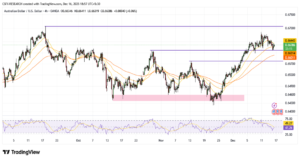
ECB Holds Rates as Cooling Inflation Backs Policy Pause.
ECB Holds Rates Steady as Subdued Inflation Supports Prolonged Policy Pause
Market Overview: ECB Signals Stability as Inflation Cools
The European Central Bank kept interest rates unchanged at its latest policy meeting, reinforcing expectations that monetary policy will remain on hold for an extended period. Policymakers struck a cautious but steady tone, reflecting growing confidence that inflation is under control and that the eurozone economy is expanding at a sustainable pace.
The ECB maintained its deposit rate at 2%, the level reached in June last year after completing a year-long easing cycle from a record high of 4%. With inflation easing and growth holding up better than expected, the central bank sees little immediate need to adjust policy settings.
Inflation Trends: Price Pressures Ease Further
Recent inflation data strengthened the case for a steady stance. Eurozone headline inflation slowed to 1.7% in January, its lowest level since September 2024 and now clearly below the ECB’s 2% target. The decline reflects easing energy prices and moderating underlying price pressures across the bloc.
While the slowdown supports the ECB’s decision to pause, it also introduces a new challenge. Inflation running below target raises the risk of undershooting if price pressures weaken further, especially if external factors amplify disinflationary forces in the months ahead.
Economic Growth: Eurozone Outperforms Expectations
Economic growth has remained resilient, reducing the urgency for further monetary stimulus. The eurozone economy expanded by 1.5% in 2025, accelerating from 0.9% in 2024 and outperforming earlier expectations. The stronger growth backdrop suggests that previous rate cuts are still working their way through the economy, supporting activity without reigniting inflation.
This combination of improving growth and cooling inflation gives policymakers room to remain patient, allowing incoming data to guide future decisions rather than pre-committing to additional easing.
Currency Dynamics: Stronger Euro Adds Complexity
Despite the broadly constructive backdrop, ECB officials remain alert to currency movements. A firmer euro against the US dollar could further suppress inflation by lowering import prices, particularly for energy and other commodities priced in dollars. At a time when inflation is already below target, sustained euro strength could complicate the ECB’s efforts to stabilize prices.
ECB President Christine Lagarde acknowledged this risk, highlighting increased uncertainty surrounding the inflation outlook. She noted that exchange rate developments are being closely monitored, as further euro appreciation could add downward pressure on already subdued inflation.
Policy Outlook: Steady Now, Easing Risks Remain
While the ECB signaled no immediate changes to policy, the balance of risks has not disappeared. Some economists argue that if inflation remains persistently below target, the case for additional easing could re-emerge later this year or into 2026. For now, however, policymakers appear comfortable maintaining current rates and assessing how economic and financial conditions evolve.
The ECB’s message was clear: policy is in a wait-and-see mode, with stability favored over pre-emptive action.
Summary
The European Central Bank’s decision to leave interest rates unchanged underscores a growing sense of stability in the eurozone economy. Cooling inflation, resilient growth, and the lingering effects of past rate cuts support a prolonged pause in policy. However, with inflation running below target and the euro strengthening, downside risks remain on the radar. For markets, the outlook points to steady ECB policy in the near term, with any future moves likely driven by sustained changes in inflation dynamics rather than short-term fluctuations.
FAQs
Why did the ECB leave interest rates unchanged?
Cooling inflation and resilient economic growth reduced the urgency for further policy adjustments, allowing the ECB to remain on hold.
What is the ECB’s current deposit rate?
The ECB’s key deposit rate is 2%, following a year-long easing cycle that ended in mid-2025.
Why does a stronger euro matter for ECB policy?
A stronger euro lowers import prices and can further reduce inflation, increasing the risk of inflation undershooting the ECB’s target.
Is the ECB expected to cut rates again this year?
While rates are expected to remain unchanged for now, risks remain tilted toward further easing if inflation stays below target.
How does eurozone growth affect ECB decisions?
Stronger growth reduces the need for additional stimulus, giving policymakers flexibility to maintain current policy settings.
Disclaimer:
This article is for informational purposes only and does not constitute financial, investment, or economic advice. Monetary policy expectations and market conditions can change rapidly. Readers should conduct their own analysis or consult a qualified professional before making any financial decisions.