Why 2026 Will Redefine Global Economic Stability.
Global Economic Outlook 2026
Introduction: A Year of Stability That Cannot Be Taken for Granted
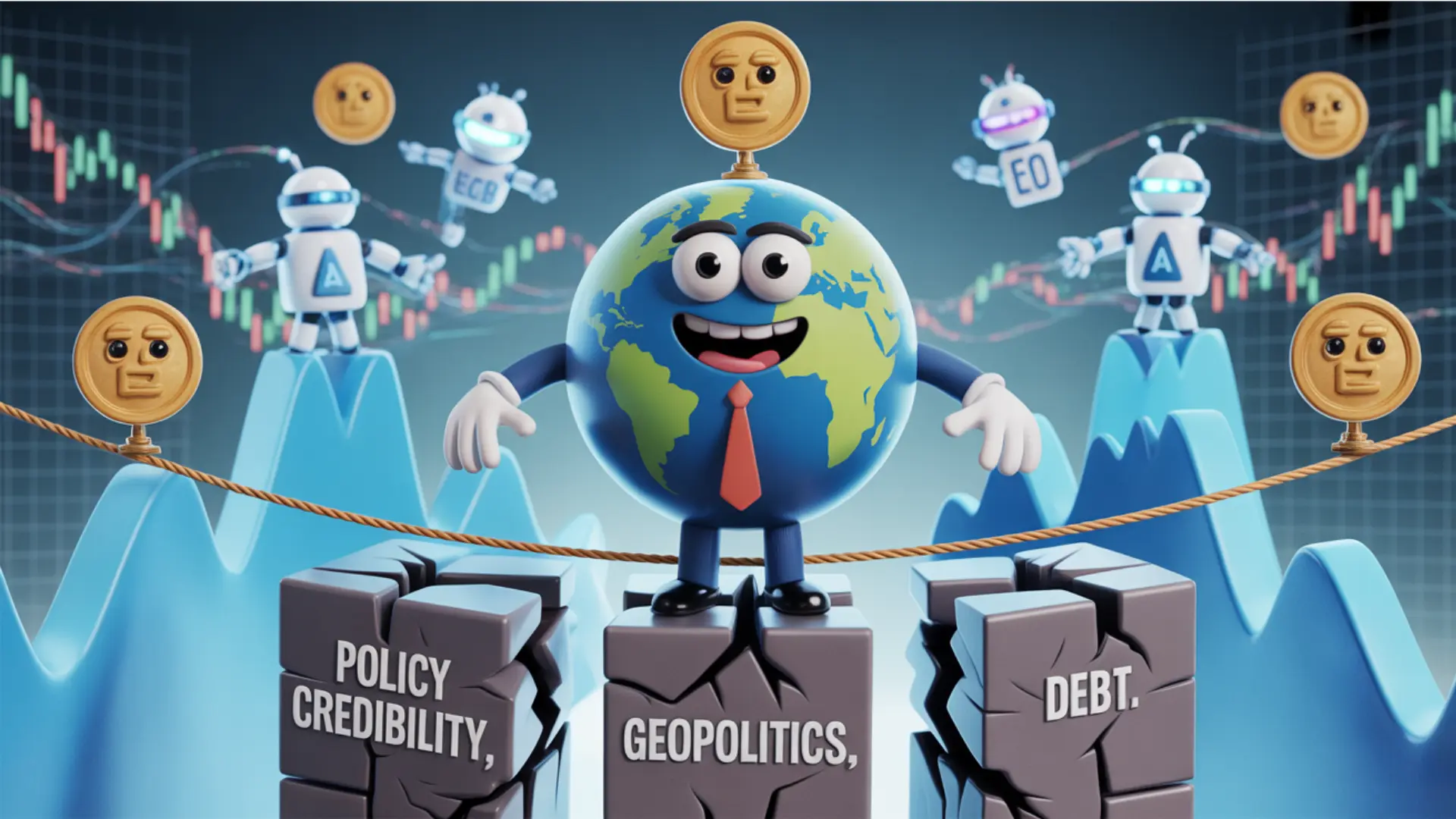
The global economy enters 2026 in a deceptively calm state. Growth persists, recession fears fade, and financial markets remain supported—but beneath this surface stability lies a fragile equilibrium. Policy credibility is under strain, geopolitical risks remain elevated, and structural imbalances continue to widen.
2026 is not a boom year.
It is not a crisis year.
It is a confidence-management year, where economic outcomes depend less on momentum and more on how effectively policymakers, institutions, and markets manage credibility, coordination, and uncertainty.
Core Theme for 2026: Growth Without Comfort
Global growth continues in 2026, supported by several stabilizing forces:
- Broad monetary easing across advanced economies
- AI-driven investment and productivity gains
- Lower and more stable energy prices
- Resilient household and corporate balance sheets
However, this growth is uneven, politically exposed, and increasingly policy-dependent. Economic expansion survives not because risks are gone—but because they are being actively managed and deferred.
What 2025 Changed Forever: The Structural Setup
1. Central Banks Lost Narrative Control
Markets no longer trade central bank promises—they trade data, politics, and credibility gaps.
- Interest rate expectations shifted sharply month to month
- Policy surprises outweighed policy intentions
- Volatility returned without a recession, a historically dangerous mix
Forward guidance weakened, and trust became conditional.
2. USD Dominance Became Tactical, Not Structural
The US dollar remains dominant—but no longer unquestioned.
- Quiet diversification away from USD assets accelerated
- Dollar strength is sold faster on every rally
- Capital flows became opportunistic rather than loyal
In 2026, global capital moves with tactics, not long-term allegiance.
3. AI Became a True Macro Variable
Artificial Intelligence is no longer a sectoral theme—it is a macroeconomic force.
- Drives capital expenditure and equity performance
- Supports global trade and cross-border investment
- Masks underlying cyclical and demographic weaknesses
AI stabilizes growth while increasing financial market fragility, amplifying both upside potential and correction risk.
Regional Outlook: Divergence Over Synchronization
Eurozone: The Quiet Upside Surprise
- Growth accelerates toward ~1.6% in 2026–27
- Germany re-emerges through fiscal stimulus and rearmament
- Investment replaces exports as the primary growth engine
Europe benefits from policy coordination and structural momentum, not exuberance.
United States: Stability with Hidden Fragility
- Growth stabilizes just below 2%
- AI productivity offsets tariff and trade headwinds
- Consumption becomes increasingly dependent on wealth effects
The US avoids recession—but growth becomes narrow, unequal, and politically sensitive.
United Kingdom: Recovery Without Conviction
- Growth improves modestly but remains uneven
- Investment outpaces consumption
- Political uncertainty remains a persistent drag
The UK economy functions—but lacks depth and durability.
Japan: Structural Underperformance
- Growth remains below 1%
- Gradual monetary tightening limits upside
- Household purchasing power continues to erode
Japan shifts from a growth contributor to a tail-risk economy.
Fiscal Policy: The Global Balancing Act
Governments face an unresolved paradox:
- Consolidate budgets
- Support growth
- Manage rising debt servicing costs
Public spending remains a key stabilizer—particularly in Europe—while the US stands out with limited fiscal growth contribution.
Growth persists not because fiscal risks disappeared, but because they are postponed rather than resolved.
Key Risks for 2026
Downside Risks
- Re-acceleration of inflation, especially in the US
- Bond market stress from fiscal slippage
- Escalation of trade wars and sanctions
- AI-driven equity market corrections
Upside Risks
- Faster-than-expected AI productivity gains
- Strong fiscal-investment multipliers in Europe
- Lower long-term inflation without damaging growth
The Regime Shift: Volatility Becomes Structural
2026 marks a clear transition:
From: Crisis-driven volatility
To: Policy-driven volatility
Markets now react less to recessions and more to:
- Policy credibility
- Global coordination failures
- Geopolitical shocks
- Liquidity dynamics
Volatility is no longer cyclical—it is structural.
Bottom Line: Managing Uncertainty, Not Predicting Outcomes
The global economy in 2026 is resilient—but not robust.
Growth continues, but confidence is thin. Stability exists, but it must be actively defended by policymakers. For investors and macro participants, success depends less on directional calls and more on regime awareness.
2026 Rewards:
- Scenario planning over rigid forecasts
- Flexibility over conviction
- Risk control over optimism
This is not a year to predict the economy.
It is a year to manage uncertainty intelligently.