The Dragon’s Closed Fist: How China Built the Most Powerful Economic Control System in History — and Why the World Can’t Look Away | Capital Street FX
The Dragon’s
Closed Fist.
Two thousand years of trade dominance, one century of humiliation, and forty years of the most patient, methodical, and ruthlessly effective economic reconstruction in human history. How China engineered a system where everything is permitted and nothing is safe — where markets flourish until they threaten the hand that feeds them, where money flows freely until it doesn’t, where the world’s factories, its rare earths, its infrastructure loans, and its commodity hunger all answer to a single architectural principle: the Party is the market’s last word. And why, for all its power, the Dragon’s fist cannot quite open wide enough to hold the world’s reserve currency.
The Economy That Moved the World — and Then Refused to Stop
There is no modern economic story without China. Not the price of copper on the London Metal Exchange, not the cost of a solar panel on a rooftop in Germany, not the fuel in an Indian power plant or the steel in a Brazilian bridge. China’s decisions ripple through every market on earth with an immediacy and a force that no other single country except the United States can match — and unlike the United States, China makes those decisions behind a single door that opens only one way. When Chinese factory activity data disappoints, copper falls. When Beijing announces infrastructure stimulus, iron ore rallies. When the People’s Bank of China adjusts its daily currency fixing, traders from Johannesburg to São Paulo react before the press conference ends. When China imposes rare earth export controls — as it did in escalating stages through 2024 and 2025 — Ford shuts production lines and defence contractors scramble for alternative supply that simply does not exist at scale.
But the standard account of China’s economic rise — the manufacturing miracle, the WTO accession story, the infrastructure buildout, the commodity demand engine — is increasingly inadequate. It describes what China does, but not how China operates. And understanding how China operates is the analytical prerequisite for understanding where this story leads: for global markets, for the dollar, for the multilateral system built over the past six centuries, and for every trader who has exposure to the assets that China’s choices move.
This extended analysis adds three dimensions that conventional coverage omits. First, the architecture of China’s command economy system — the mechanisms by which the Chinese Communist Party maintains top-down control over every significant economic outcome while maintaining a surface presentation of market capitalism. Second, the extra-territorial influence multiplier — how China uses investments, loans, supply chains, market access, and financial infrastructure to project economic power far beyond its borders and convert that influence into compounding geopolitical advantage. And third, the fundamental trust deficit at the heart of China’s monetary ambitions — why a system built on control cannot, by its nature, produce the institutional trust that global reserve currency status requires, and what that means for the long-term trajectory of yuan internationalisation.
Two Thousand Years of Commerce, One Century of Wounds, and the Longest Economic Revenge in History
The narrative of China’s economic rise is sometimes told as if it began in 1978 with Deng Xiaoping’s “reform and opening up” policy. In reality, China has been one of the world’s foremost centres of production, commerce, and trade for most of the past two thousand years. From approximately the 2nd century BCE to the 15th century CE, the Silk Road placed China at the epicentre of the most important long-distance trading system in the ancient and medieval world. Chinese silk, porcelain, tea, paper, and spices flowed westward in exchange for precious metals, glassware, horses, and luxury goods.
The “Century of Humiliation” — from approximately the 1840s to the 1940s — stripped China of its industrial base, its territorial integrity, and its position in global trade. By 1950, China’s share of global GDP had fallen to approximately 4%. The determination to prevent a recurrence of that humiliation — through economic development, technological self-sufficiency, and the gradual reclamation of global commercial leadership — is the unifying strategic logic that has driven Chinese economic policy from Mao Zedong through Deng Xiaoping to Xi Jinping. This is not merely context. It is the operating system within which every Chinese economic decision is made.
Deng Xiaoping’s 1978 reforms initiated one of the most dramatic economic transformations in human history. Over the following four decades, China’s GDP growth averaged over 9% per year, lifting approximately 800 million people out of extreme poverty. China’s 2001 accession to the WTO was the modern equivalent of reopening the Silk Road: by 2009, China had become the world’s largest exporter. By 2024, its share had reached 15.9%, accounting for one in every seven export dollars in the global economy.
The Closed Loop: How the Party Became the Economy’s Invisible Ceiling — and Its Invisible Floor
The most important analytical error in mainstream Western coverage of China’s economy is calling it a market economy with government characteristics. It is, in reality, a command economy with market characteristics — and the difference between those two descriptions is not a matter of ideology. It is a matter of what you can predict, what you can trust, and what you cannot own without permission. In a market economy with government characteristics, the state regulates. In a command economy with market characteristics, the state governs. Everything between those two descriptions is the story of every trade, every investment, every valuation discount, and every regulatory shock that China’s markets have produced in the last decade. Commerce is welcome. Wealth is permitted. Innovation is encouraged. But all of it operates within a ceiling and a floor that are set not by the law, not by competition, and not by the market — but by whoever sits at the top of the party hierarchy on any given day, with the power to redraw the boundaries whenever the balance of their interests changes.
Understanding this distinction is not ideological. It is analytical. It explains phenomena that confuse observers operating with a Western market framework: why Chinese companies behave in ways that sacrifice commercial return for political objective; why Chinese banks extend credit to loss-making state enterprises that no private lender would touch; why PBOC currency management consistently prioritises export competitiveness over domestic purchasing power; and why private Chinese technology companies that become too powerful — Alibaba, Didi, Meituan, New Oriental — are abruptly cut down regardless of their commercial success or the destruction of shareholder value. The party is not intervening in a market. It is exercising ownership rights in a system where the party is the ultimate beneficial owner of all productive capacity.
Layer 1: Who Really Owns the Economy — and It Isn’t the Shareholders
China’s constitution explicitly establishes the leadership of the Chinese Communist Party over all aspects of Chinese state and society. This is not a rhetorical commitment. It is operationalised through a set of institutional mechanisms that embed party control at every level of economic decision-making.
The National Development and Reform Commission (NDRC) sets five-year industrial plans that determine which sectors receive capital, at what scale, and on what timeline. The plans are not indicative guidance — they are directives, backed by state bank lending, tax policy, land allocation, and regulatory treatment. When the NDRC declares that China will dominate EV battery manufacturing, CATL and BYD do not compete with their own capital. They execute a state-assigned industrial task with state-provided support. The commercial profit they generate is a by-product of successful plan execution, not the primary objective.
All major state-owned enterprises (SOEs) — which control critical sectors including banking, energy, telecoms, transport, and heavy industry — have embedded party committees that have formal authority over strategic decisions. Since Xi Jinping’s 2017 revisions to the Company Law, this embedding has been extended to many large private companies as well. The legal requirement for private firms above a certain size to maintain party committees — with party secretaries who have access to company information and can participate in governance — means that the distinction between “state-owned” and “private” in the Chinese context is considerably less meaningful than the same distinction implies in Western systems.
For traders, this has a direct implication: decisions by major Chinese companies must always be analysed through the lens of political objective as well as commercial logic. A Chinese company expanding into a new market, acquiring a foreign asset, or cutting prices to capture market share may be doing so in response to state direction rather than purely commercial calculation. The commercial return on these decisions may be secondary or even negative from a shareholder perspective. This creates systematic mispricing opportunities — both overvaluation of Chinese companies whose growth is artificially subsidised, and undervaluation of companies caught in regulatory crossfire.
Layer 2: The Wall Around the Money — Why Capital Controls Are the Whole System
China’s capital controls — the restrictions on the free movement of money across its borders — are the most important single institutional feature of its economic system for anyone seeking to understand what China’s financial architecture can and cannot accomplish. They are not, as they are sometimes characterised, a legacy relic from an earlier era of economic management. They are an actively maintained and continuously refined system that serves several simultaneous purposes: macroeconomic stability management, prevention of wealth flight, preservation of domestic financial sector control, and maintenance of the party’s ability to direct capital allocation without the corrective pressure of exit rights.
The capital control system works in both directions. Chinese residents and companies cannot freely move capital out of China without regulatory approval — limiting the ability of Chinese households to diversify internationally or of Chinese companies to invest abroad without state sanction. Foreign investors cannot freely move capital into or out of Chinese onshore markets — limiting the ability of international capital to discipline Chinese corporate behaviour through the threat of exit. This bidirectional restriction creates a captive domestic financial system in which the state banking sector can maintain credit conditions, interest rates, and capital allocation patterns that would be impossible to sustain if Chinese savers and investors had genuine exit rights.
The practical consequence for yuan internationalisation is severe and structural. A currency cannot serve as a genuine reserve asset unless the institutions and governments holding it can invest it freely in deep liquid markets, convert it back to other currencies without friction, and trust that the rules governing their holdings will not change unilaterally. China’s capital controls preclude all three of these conditions. The PBOC and the Chinese government understand this constraint. The decision to maintain capital controls despite the cost to yuan internationalisation is not an oversight — it is a deliberate choice to prioritise domestic political and economic control over international monetary status.
Layer 3: The Price of Everything — How the PBOC Uses the Exchange Rate as a Policy Weapon
The yuan’s managed floating exchange rate system — in which the PBOC sets a daily central parity fixing and allows the onshore rate to trade within a ±2% band — is not primarily a monetary policy instrument in the way Western central bank currency operations are. It is an industrial policy tool deployed to manage export competitiveness, import balance, and capital flow direction simultaneously.
The PBOC’s daily fixing process gives the party direct, daily control over the price of Chinese exports in global markets. A weaker yuan makes Chinese exports cheaper for foreign buyers and more competitive against alternatives. A stronger yuan reduces import costs, supporting domestic consumption but at the expense of export margin. The PBOC consistently manages this tradeoff in favour of export competitiveness, reflecting the party’s prioritisation of employment in manufacturing, trade surplus maintenance, and foreign exchange reserve accumulation over the purchasing power of Chinese households.
The 2015 yuan devaluation shock — when the PBOC abruptly adjusted the fixing mechanism in a way that the market interpreted as a covert competitive devaluation — generated immediate global market turbulence, with the S&P 500 falling over 10% within weeks. This episode demonstrated both the global market sensitivity to PBOC currency decisions and the unpredictability that is inherent in a system where exchange rate policy can change overnight without market preparation. The memory of 2015 is embedded in every institutional model that prices China-related assets: there is a permanent uncertainty premium around any PBOC-managed instrument that does not exist for free-floating currencies, and this premium increases with the degree of geopolitical tension in the US-China relationship.
Layer 4: The Private Sector That Isn’t — Everything Goes, Until It Doesn’t
The existence of a large and nominally private Chinese corporate sector — Alibaba, Tencent, ByteDance, BYD, Huawei, Xiaomi, CATL — creates the impression of market capitalism that makes the command economy architecture easy to misread from outside. These companies are real businesses, generating real revenues, deploying genuine capital, and competing in real markets. Their commercial success is not manufactured. But the conditions under which they operate are fundamentally different from those governing their Western counterparts, in ways that matter for both investment analysis and geopolitical risk assessment.
The 2021–2022 technology crackdown is the clearest case study. Over a period of approximately eighteen months, regulatory interventions targeting Alibaba (antitrust investigation, $2.8 billion fine, restructuring orders), Didi (forced delisting from NYSE immediately after its IPO), Meituan (competition investigation), New Oriental (destruction of the private tutoring industry through regulatory action), and ByteDance (forced restructuring of TikTok’s ownership under national security pressure) destroyed approximately $1.5 trillion of market capitalisation. The triggering factor in each case was not commercial misconduct but the perception that these companies were accumulating economic power, data assets, or public influence that threatened party primacy.
The lesson for investors is unambiguous: in the Chinese system, private property rights are conditional on political conformity. No amount of commercial success insulates a Chinese company from regulatory intervention if the party determines that the company’s growth trajectory threatens the balance of power the party requires to govern. This creates a permanent ceiling on Chinese tech valuations relative to Western peers, a ceiling that will persist for as long as the current political system is in place.
The more analytically precise framing is this: China does not sparingly permit commerce. It comprehensively enables it. Markets are allowed to develop, companies are permitted to scale, and wealth accumulation of extraordinary magnitude is tolerated — even celebrated, when it serves the national project. The system is not one of restricted enterprise but of conditionally permitted enterprise. The condition is alignment with the political interests of the dominant actors in the party hierarchy at any given time. Commerce, investment, and market dynamics operate freely within this condition. They generate real wealth, real jobs, real innovation. But every participant in the Chinese economy, from the largest tech conglomerate to the smallest export manufacturer, operates with an implicit understanding that the conditions of operation can change without notice if the political calculus shifts. What was strategically valuable yesterday may be politically threatening tomorrow. This is not a legal risk in the Western sense — there is no predictable regulatory process that can be anticipated, managed, and planned around. It is a systemic feature of an economy where the ultimate rule-setter is the political hierarchy, not the law. Everything goes, in China, until it doesn’t. And when it doesn’t, the change arrives with the speed and finality of a party directive.
Layer 5: The Blindfold on the Data — How Information Control Keeps the Economy on Message
China’s control over information flows — the Great Firewall, the National Security Law’s provisions on data handling, the requirement for foreign companies to store Chinese user data on servers in China, and the restrictions on the publication of economic statistics that reflect poorly on official narratives — is not separable from its economic management system. Information control and economic control are the same system, deployed at different points in the same circuit.
For economic analysts and traders, this creates a systematic problem: the data that Chinese authorities publish about the economy is more reliable in trend direction than in precise magnitude, and certain categories of data are actively managed to present a more favourable picture than underlying conditions justify. Property sector data, youth unemployment statistics, local government debt figures, and banking system non-performing loan ratios have all been subject to documented periods of presentation management. This does not mean Chinese economic data is useless — the directional signals are real — but it means that the uncertainty bands around any specific Chinese economic statistic are substantially wider than the standard errors published by the National Bureau of Statistics would imply. Markets that are priced as if Chinese official data were as reliable as US Bureau of Labor Statistics data are structurally mispriced in the direction of overconfidence.
“China is not a market economy that the government occasionally directs. It is a directed economy that occasionally permits markets. The difference is not semantic. It is the fundamental operating parameter that determines how every Chinese economic decision should be analysed.”
Capital Street FX Research Desk — April 2026
The Debt Trap, the Dial Tone, and the Rare Earth Embargo: China’s Six-Dimensional Grip on the World
China’s domestic command economy architecture is the foundation. The extra-territorial influence system is the superstructure built upon it. Understanding why China’s economic reach translates into geopolitical outcomes that no comparably-sized economic actor has achieved requires understanding the mechanisms through which economic relationships are converted into political compliance, information advantage, and strategic position across the entire world — simultaneously and systemically.
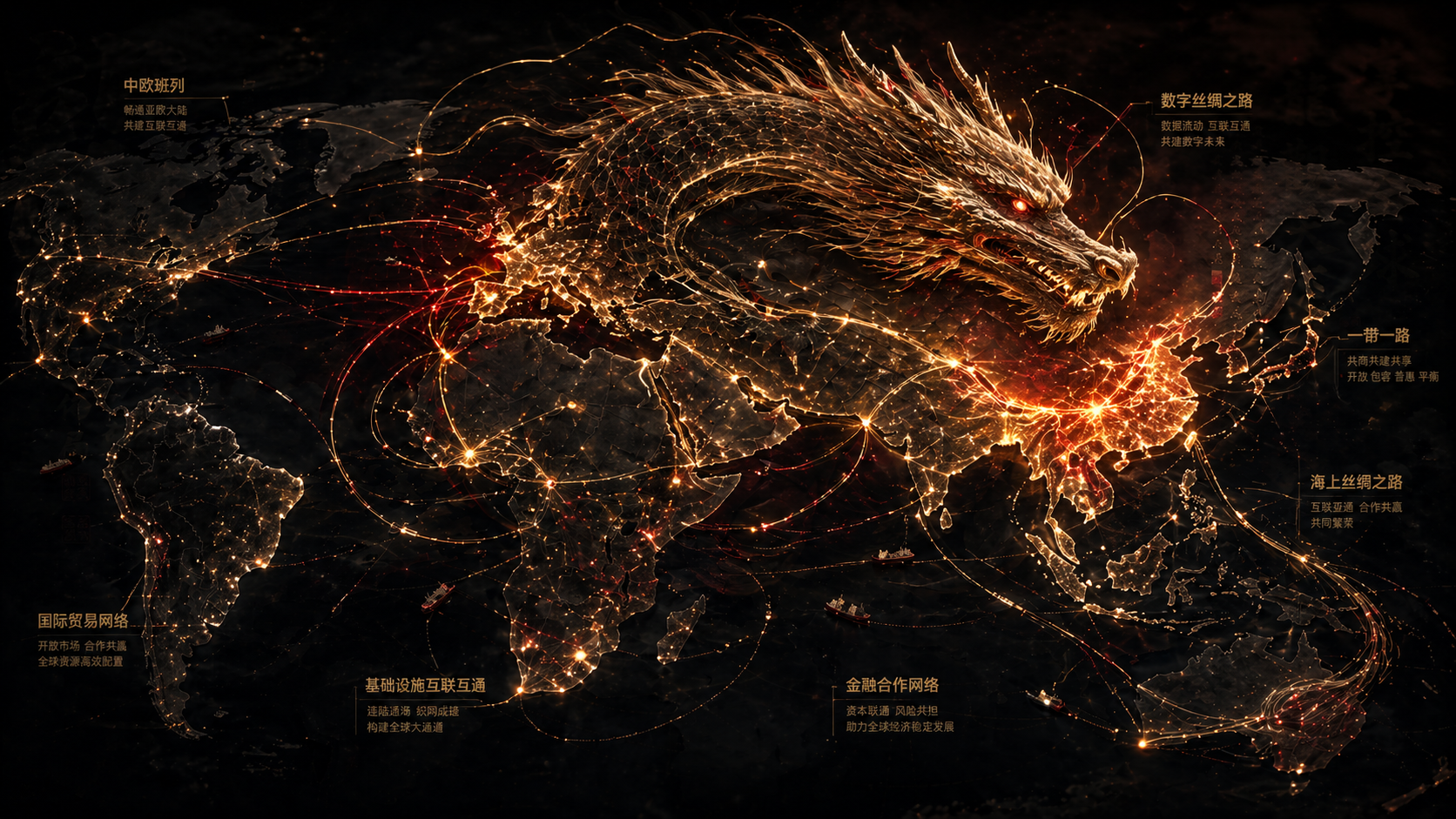
The influence multiplier operates through six distinct but interconnected channels, each of which produces value for China that is greater than the sum of its financial components. When China provides infrastructure financing to a developing country, it is not merely earning a commercial return on a loan. It is simultaneously building physical infrastructure that encodes Chinese technical standards and creates long-term maintenance dependencies; establishing a bilateral economic relationship that reduces that country’s propensity to support anti-China resolutions at the UN; creating employment for Chinese construction firms and their workers; building demand for Chinese steel, cement, and equipment; and potentially gaining strategic access to port infrastructure, digital communications networks, or mineral resources that have long-term military and economic significance. A single BRI infrastructure project is not a loan. It is a multi-dimensional geopolitical instrument whose full return cannot be captured by any standard financial analysis.
One Dollar In, Ten Dollars of Influence Out: Why BRI Returns Are Never Just Financial
What makes China’s influence system strategically distinctive is not any single component — BRI financing, or rare earth leverage, or CIPS — but the way these components compound. A country that accepts BRI infrastructure financing becomes more dependent on Chinese trade flows to service the debt, which makes it more reluctant to support Western sanctions against China, which makes it a less effective participant in Western-led multilateral pressure campaigns, which reduces China’s geopolitical cost of further economic expansion into that country’s neighbourhood. The initial economic transaction generates a political return that makes the next economic transaction cheaper and easier.
This compounding structure is not accidental. It reflects the long-horizon, patient strategic planning that is a consistent feature of Chinese foreign policy going back to Deng Xiaoping’s admonition to “hide your strength, bide your time.” China has spent thirty years systematically building a global economic position that creates structural dependencies across 150 countries. The West is only now beginning to understand the full scope of what that position enables — and to attempt, through supply chain diversification, BRI alternatives, and technology export controls, to limit further expansion of Chinese leverage. But the existing infrastructure of dependency, built over three decades, cannot be quickly reversed. The compounding returns on thirty years of patient positioning are still accumulating.
The Order That Ran the World for Six Centuries Is Breaking — and China Is Standing in the Gap
To understand the full context of China’s economic architecture, it is necessary to situate it within the longer arc of global history that it is explicitly designed to redirect. The world order that has governed international commerce, finance, and security for the past five to six centuries — from the late Renaissance period through the age of European exploration, colonial expansion, the industrial revolution, the two world wars, the Cold War, and the American-led unipolar moment — has been, fundamentally, a Western-designed and Western-operated system. The financial infrastructure (the Bank of England, then the Federal Reserve, then Bretton Woods, then the petrodollar system, then SWIFT and the dollar-clearing architecture); the legal frameworks (English common law, ICSID arbitration, WTO dispute settlement); the military guarantees (the British Navy’s protection of sea lanes in the nineteenth century, US carrier battle groups in the twentieth and twenty-first); and the political norms (democracy promotion, human rights frameworks, liberal international order) were all designed by Western powers to serve Western interests, and structured in ways that made alternative arrangements difficult to construct or maintain.
China’s economic architecture — its command economy, its BRI, its alternative financial infrastructure, its sanctions relief ecosystem, its rare earth leverage — is, at the most fundamental level, a project of constructing an alternative to this Western-designed system. Not necessarily to replace it in a single dramatic moment, but to progressively reduce the West’s ability to use the system as a coercive instrument against China and China’s partners, while simultaneously expanding the number of countries for which the Chinese alternative is more accessible and more attractive than the Western one.
The timing of this project is not coincidental. It has accelerated most dramatically precisely as the Western order has shown visible signs of internal fragmentation: Brexit, the election of populist leaders in the United States and Europe who were openly sceptical of multilateral institutions, the weaponisation of dollar-denominated sanctions against major economies (Russia, Iran, Venezuela) that demonstrated the coercive potential of financial system dominance to countries that had previously not felt directly threatened by it, and the post-COVID inflation and supply chain crises that revealed the vulnerabilities embedded in the globalised production system. Every Western own-goal — every demonstration that the Western order is either unwilling to deliver its stated benefits or willing to weaponise its architecture against rule-breakers — strengthens the case for China’s alternative.
“The world that China is building is not a Chinese-led replacement for the Western order. It is a world in which the Western order no longer has the leverage to compel compliance from anyone who has access to the Chinese alternative. That is a different, and in some ways more durable, kind of power.”
Capital Street FX Research Desk — April 2026
The Pipe That Cannot Become a Vault: Why China’s Currency Will Never Be the World’s Reserve
Here the analysis arrives at the most important and least discussed tension in China’s monetary strategy. China has constructed an extraordinarily effective architecture for accumulating economic leverage, projecting extra-territorial influence, and providing an alternative to Western-led financial infrastructure. What it cannot construct — and what its own system structurally prevents it from constructing — is the foundation of institutional trust that global reserve currency status requires.
This is not a political observation about the desirability of Chinese institutions. It is a structural observation about the requirements of the monetary system that China aspires to displace. The US dollar’s reserve currency status rests on three pillars that were built over decades and are now deeply embedded in global financial infrastructure: the depth and liquidity of US capital markets, which allow dollar-holders to invest their reserves in instruments that are genuinely priced by market forces; the rule of law and property rights protection in the United States, which means that a dollar claim is enforced by an independent legal system rather than by political preference; and the openness of the US capital account, which means that any entity holding dollars can move them freely without seeking government permission. China’s system cannot provide any of these three pillars as currently constituted, because providing them would require dismantling the capital controls, judicial subordination to party authority, and information restrictions that are the operational foundation of the command economy itself.
A Conduit Moves Money. A Reserve Stores It. China Has Built One and Cannot Build the Other.
An international currency serves two distinct functions that are often conflated but are analytically separable: a transaction conduit (a medium through which trade and financial flows are settled) and a reserve store of value (an asset that governments and institutions hold to preserve wealth and provide financial stability). The requirements for these two roles are different, and China’s currency can realistically aspire to the first while the structural barriers to the second are nearly insurmountable without fundamental political reform.
The yuan as a transaction conduit is already becoming more significant. CIPS volume grew 43% in 2024. Trade settlement in RMB reached 7.5% of China’s total — a record. Countries that trade extensively with China, that receive BRI financing, or that find themselves under Western sanctions have genuine incentives to use yuan channels for transactions that would otherwise require dollar intermediation. For these purposes, the yuan’s lack of full convertibility matters less: if you are trading with China, you need yuan regardless of whether you can freely invest those yuan in Chinese capital markets.
The yuan as a reserve store of value is a fundamentally different proposition. A central bank holding yuan reserves needs to know that those reserves will retain their purchasing power, that the rules governing their investment and repatriation will not change unilaterally, that the legal framework protecting the claim is enforced by independent courts rather than party committees, and that the issuing country will not use the reserve relationship as leverage. China’s system fails on all four criteria, and the failures are structural rather than correctable through incremental reform.
When You Freeze $300 Billion in Reserves, Every Central Bank in the World Takes Notes
China’s use of its economic leverage as a coercive instrument — rare earth export controls on Western defence and EV supply chains, trade sanctions against Australia following the COVID inquiry call, financial pressure on countries that receive Taiwanese officials or support Taiwan’s international participation — creates a problem for yuan internationalisation that is more subtle but equally serious than the capital control constraint. Every time China demonstrably uses its economic relationships as coercive instruments against countries that displease it, it provides all other countries with evidence that holding yuan reserves or accepting BRI financing creates a vulnerability to similar treatment.
The Russia sanctions episode, paradoxically, has accelerated this awareness rather than reducing it. Countries that watched the West freeze $300 billion of Russian central bank reserves held in Western financial infrastructure concluded that reserve assets are only as secure as the political relationship between the holder and the issuer. But they simultaneously watched China provide Russia with an economic lifeline after those sanctions were imposed — and understood that China’s willingness to do so was not altruistic but conditional on Russia’s continued strategic alignment with Chinese objectives. The implicit message to every country considering deepening yuan integration is not “China is a reliable partner.” It is “China is a reliable partner as long as you are useful to China and do not challenge its core interests.” This is a transaction relationship, not a trust relationship. And reserve currency status requires the latter.
CIPS, the Digital Yuan, and the Plumbing That Doesn’t Run Through Washington
CIPS, the digital yuan, and China’s bilateral currency swap network are simultaneously alternative financial plumbing (useful for legitimate trade settlement), sanctions circumvention infrastructure (useful for Russia, Iran, and Venezuela), and surveillance tools (the digital yuan’s programmable features allow the issuing authority to monitor and, in principle, restrict transactions in ways impossible with physical cash or traditional bank accounts). This triple function is precisely what makes Western governments resistant to integrating with Chinese financial infrastructure and why the trust problem is structural rather than merely reputational.
The digital yuan’s programmable characteristics — which Chinese authorities have described as enabling “controllable anonymity” — embed, at the protocol level, the ability of the issuing authority to monitor transactions, set expiry dates on currency holdings (to stimulate spending), restrict use to designated categories, and potentially freeze or reverse transactions. These features are presented domestically as consumer protection and anti-corruption tools. Internationally, they are correctly understood as embedding Chinese state surveillance capability into any financial system that adopts the digital yuan as a settlement instrument. No government that has alternatives will accept this at scale. And governments that accept it because they lack alternatives are, by definition, not providing China with genuine monetary legitimacy — they are providing China with captive users of its currency infrastructure, which is a different and less durable kind of monetary power.
One in Every Seven Export Dollars on Earth. One Country. No Substitute.
China has become a major trading partner of more than 150 countries and regions, and for a growing number of those countries, China is the single largest bilateral trading partner. ASEAN nations collectively have named China their largest trading partner for five consecutive years through 2024. China’s trade with the Middle East has expanded more than nine times since 2005. Trade with South America has expanded more than thirteen times. In 2024, China’s total goods exports were $3.57 trillion against imports of approximately $2.59 trillion, generating a merchandise trade surplus of approximately $980 billion — a record.
China contributes approximately 28–30% of global manufacturing output — more than the United States, Germany, and Japan combined. It is the world’s largest automobile producer at 31.28 million vehicles in 2024. The composition of its exports has shifted fundamentally over the past decade: machinery and electronics remain dominant at 40–45% of total, but transportation equipment — led by electric vehicles — is the fastest-growing category, with China accounting for 25% of world EV exports, 48% of battery exports, and 72% of solar module exports in 2024.
The Factory That Built the Modern World — and Refuses to Be Replaced
China’s manufacturing dominance is not merely a matter of volume. The more important dimension is the depth and integration of China’s manufacturing ecosystem: the coexistence of raw material processing, component manufacturing, sub-assembly, final assembly, and export logistics within a small number of highly concentrated industrial clusters creates cost and capability advantages that are extremely difficult to replicate elsewhere, even with significant government subsidy and political will.
China’s ability to deliver manufactured goods at substantially lower prices than Western alternatives rests on structural advantages built and refined over four decades. Industrial electricity prices are deliberately suppressed at approximately $0.09 per kilowatt-hour — below most Western manufacturing economies — supported partly by the rapid growth of domestic renewable energy capacity. The depth of the supply chain ecosystem means inputs are sourced locally, reducing procurement costs and lead times. And the scale of Chinese manufacturing generates cost-curve advantages through specialisation and learning that are impossible to replicate at smaller production volumes.
The “China+1 strategy” — diversifying manufacturing to include one additional country as a hedge against China risk — has been discussed extensively since the 2018–2019 US-China trade war. The reality of implementing it has been considerably more challenging than the strategy suggests. A Global Trade Alert analysis noted that Chinese exports to Southeast Asia grew 14.3% in the first ten months of 2025 — suggesting that a substantial portion of the “China+1” shift is in practice a “China transhipment” arrangement rather than genuine supply chain diversification.
The Seventeen Elements That Could Stop a Fighter Jet, a Wind Turbine, and a Factory Line — All Controlled by One Country
China accounted for about 91% of global rare earth separation and refining production and 94% of sintered permanent magnet production in 2024, according to the International Energy Agency. These materials are essential for EVs, defence systems, wind turbines, and AI hardware. In April 2025, China announced export controls on seven rare earth elements — samarium, gadolinium, terbium, dysprosium, lutetium, scandium, and yttrium — requiring export licences for any shipment. In October 2025, Beijing dramatically expanded these controls. The practical consequences were immediate: rare earth magnet shipments from China halved in May 2025. Ford’s Chicago factory temporarily suspended production. US defence contractors began emergency stockpiling.
A 2025 analysis by Benchmark Mineral Intelligence indicates the West will be dependent on China for 91% of heavy rare earth needs in 2030, only modestly reduced from 99% in 2024. The episode demonstrated that China’s rare earth processing dominance is not merely a theoretical geopolitical asset but a practical coercive instrument that can be deployed with effects comparable to an energy embargo. A partial suspension of the controls was agreed as part of the US-China tariff truce of late 2025, but the strategic reality — that China controls the bottleneck of the clean energy and defence technology supply chains — remains unchanged.
The Yuan: The Currency That Moves the World’s Money — But Cannot Be Trusted to Hold It
The yuan operates under a managed floating exchange rate system, in which the People’s Bank of China sets a daily central parity against the US dollar and allows the onshore yuan (CNY) to trade within a ±2% band around that level. Offshore yuan (CNH), traded in Hong Kong and other financial centres outside the mainland, is not subject to these formal controls and trades more freely.
As the analysis of the trust deficit above establishes, the yuan’s current trajectory is toward increasing importance as a transaction conduit — particularly for China-adjacent trade, BRI-linked financial flows, and sanctions-circumvention channels — but faces structural barriers to reserve currency status that are inseparable from China’s political system. As of June 2025, the yuan accounted for approximately 3% of global SWIFT payments versus 48% for the US dollar. China’s realistic near-term goal appears to be a multipolar currency system in which the yuan is a competitive transaction alternative rather than a dollar replacement — a more achievable and arguably more strategically stable objective that does not require the institutional reforms that true reserve currency status demands.
The critical distinction that every trader and analyst must internalise about the yuan is the difference between a transaction conduit and a trusted monetary anchor. A conduit moves value between two points. A monetary anchor stores value at rest, across time, under conditions the holder cannot fully predict, in a system they do not control. The yuan is developing its conduit function with considerable success — CIPS, bilateral swap lines, BRI settlement, and the digital yuan infrastructure are all capable conduit mechanisms that genuinely reduce friction in China-adjacent transactions. But the same control architecture that makes China’s economic system effective at directing macro outcomes is precisely what prevents the yuan from becoming a store of value that the rest of the world would trust unconditionally. A currency held in reserve must be trusted not to be devalued coercively, not to be frozen, not to be subject to unilateral capital control changes, and not to be weaponised as a diplomatic instrument. China has, either by design or necessity, exercised all four of these options at various points in its recent monetary history. No central bank managing foreign exchange reserves can hold meaningful yuan without pricing in the risk that the rules of yuan access will change if the political relationship deteriorates. That risk premium is, for now, prohibitive at the scale required for genuine reserve currency status. The yuan is the world’s most sophisticated transactional pipe. It is not yet — and may never be — its monetary bedrock.
How a Road Loan Becomes a Vote at the UN: China’s Extra-Territorial Influence Machine
China’s most strategically important economic innovation in the twenty-first century is not its manufacturing scale, its rare earth monopoly, or its digital yuan infrastructure. It is the system by which it converts bilateral economic relationships — investments, loans, supply contracts, market access, and infrastructure projects — into layered geopolitical dependencies that give China extraterritorial influence over sovereign decisions in countries on every inhabited continent. This influence multiplier operates by transforming the economic relationship from a purely commercial transaction into a political one, creating incentives — and sometimes compulsions — for partner governments to align their foreign policy, their vote in multilateral institutions, their technology infrastructure choices, and their diplomatic postures with Chinese interests.
The mechanism is not coercion in the crude sense. It is the patient construction of dependency relationships across multiple dimensions simultaneously, such that any individual country’s calculation of “can I afford to displease Beijing on this issue?” is answered, with increasing frequency, in the negative. A country that has borrowed from Chinese state banks to build its national port, purchased Huawei equipment to run its 5G network, sold its primary commodity export primarily to Chinese buyers, and sent 25% of its students to Chinese universities on scholarship programmes is not being coerced when it declines to criticise China’s human rights record at the UN Human Rights Council. It is making a rational calculation under conditions that China has patiently created over a decade of systematic relationship-building.
The financial multiplier effect of this influence system is the aspect most underappreciated by Western analysts. Every country brought into the Chinese economic orbit adds to China’s effective export market, creates additional demand for Chinese state bank lending, provides access to strategic resources, and reduces the global coalition that could credibly oppose Chinese interests in any particular dispute. The BRI’s $33.69 billion in annual investment flows in 2024 do not merely build roads and ports. They build networks of obligation that pay dividends in trade contracts, military access, multilateral institution votes, and diplomatic cover — outcomes whose economic value, compounded over the life of the relationship, vastly exceeds the initial capital invested. This is the influence multiplier at work: a dollar of Chinese investment generates more than a dollar’s worth of strategic return when it creates a layer of political dependency that would cost ten dollars to undo.
China’s ability to use sanctions relief as an influence tool — offering to trade with, invest in, or provide financial services to countries that the US and EU have isolated — deserves particular emphasis. For Iran, Russia, Venezuela, North Korea, and a growing number of countries that have fallen into Western sanctions regimes, China is not merely a trading partner. It is an economic lifeline without which the sanctions architecture would be significantly more effective. In exchange for this lifeline, China receives supply contracts below market price, strategic asset access (ports, military bases, resource concessions), and diplomatic alignment that it could not purchase in an open market. The willingness to absorb the reputational cost of dealing with sanctioned governments — and the ability to do so profitably by setting the terms of trade — is itself a strategic asset of China’s command economy architecture that no Western government can replicate.
Six Centuries of Western Order. Four Cracks Since 2008. One Country Filling Every Gap.
To understand what China is building, you first have to understand what it is replacing — or more precisely, what it is filling in around, as the structure that governed global commerce for six centuries slowly develops the kind of cracks that empires develop before they don’t recover. The Western-led economic and financial order — the one that began with Portuguese caravels on the Indian Ocean trade routes in the fifteenth century, consolidated itself in the City of London in the eighteenth, and codified itself in the Bretton Woods conference rooms of 1944 — is not collapsing. But it is fracturing. And China, with the patience that comes from a two-thousand-year civilisational memory, has been standing at every fracture line with a cheque book, a construction crew, and a diplomatic offer that asks only one thing in return: alignment.
The Western order’s foundation was laid in the fifteenth and sixteenth centuries, when Portuguese and Spanish navigators established sea-lane dominance across the Atlantic and Indian Oceans, displacing the Arab and Chinese-influenced maritime trading networks that had previously operated across those routes. The subsequent four centuries saw the progressive construction of a Western-controlled global commercial system: the Dutch East India Company and the British East India Company institutionalising state-backed corporate extraction; the City of London developing the financial instruments — bills of exchange, marine insurance, bond markets, central banking — that became the global financial architecture; the British Empire enforcing open trading conditions at the point of a Royal Navy cannon; and the post-1945 Bretton Woods system replacing British with American financial hegemony through the dollar-gold standard and the creation of the IMF, World Bank, and GATT.
The critical feature of this six-century arc is that it produced a set of rules, institutions, and practices that were genuinely global in their geographic reach but structurally biased toward Western interests. The WTO dispute settlement system, for all its formal equality, was designed by Western trade lawyers to serve Western commercial interests. The IMF’s conditionality frameworks reflected Western macroeconomic orthodoxy. The dollar’s reserve currency status allowed the United States to run persistent current account deficits — importing more than it exported — while the rest of the world accumulated dollar reserves to maintain export-led growth strategies. This was not conspiracy. It was the natural consequence of the fact that the architects of the post-war system were Western, and they built what they knew.
The Four Fractures: How 2008, Frozen Reserves, Populist Retreat, and a Failing IMF Handed China Its Moment
The 2008 global financial crisis, originating in the US subprime mortgage market and amplified by the financial architecture that Western regulators had allowed to become structurally fragile, destroyed the argument that Western financial markets were self-correcting and self-disciplining. The subsequent Western-authored response — zero interest rates, quantitative easing, and the socialisation of financial sector losses — exported inflation and asset price distortions to developing economies whose governments had not participated in the decisions that created the crisis.
For China, 2008 was an inflection point. Chinese officials who had spent the 1990s and 2000s being told by Western institutions that the path to prosperity ran through financial liberalisation, capital account opening, and adoption of Western regulatory models watched the US financial system nearly destroy the global economy and concluded that the institutional confidence the West demanded they place in Western financial architecture was not warranted. The acceleration of CIPS development, the digital yuan programme, and the BRI expansion all trace their policy foundations to conclusions drawn from the 2008 crisis.
The progressive expansion of US financial sanctions from their post-9/11 origins through the Iran nuclear sanctions, the Russia sanctions following Crimea in 2014, and ultimately the comprehensive Russia sanctions package following the 2022 Ukraine invasion demonstrated to every major economy outside the Western core that participation in dollar-denominated financial infrastructure creates a systemic vulnerability to Western coercive power. The freezing of $300 billion in Russian central bank reserves held in Western financial institutions — an unprecedented act that technically involved seizing the sovereign assets of a G20 country — was observed by every central bank and finance ministry in the world. The conclusion drawn was not that the Russia sanctions were unjust (although many developing country governments believed this). The conclusion drawn was that reserve assets held in Western institutions are not safe if the political relationship deteriorates.
This single episode — the frozen Russian reserves — did more to advance the cause of yuan internationalisation and non-dollar payment infrastructure than a decade of Chinese BRI diplomacy. Not because it made the yuan a more attractive store of value, but because it made clear that the alternative to dollar dependence, however imperfect, was less risky than previously assumed.
The simultaneous rise of anti-establishment populist movements across Western democracies — Trump in the United States, Brexit in the United Kingdom, Le Pen in France, AfD in Germany, Meloni in Italy — produced a period of significant weakening in the institutional coherence of the Western order. The Trump administration’s first term (2017–2021) saw the United States withdraw from the Trans-Pacific Partnership, the Paris Climate Agreement, and the Iran nuclear deal; question the value of NATO; impose tariffs on allies; and express open scepticism about the multilateral institutions that the United States had itself built and led. While the Biden administration partially restored US multilateral engagement, the 2024 US election returned the United States to a posture of assertive unilateralism that other Western countries cannot fully counterbalance.
For developing countries evaluating whether to align more closely with Western or Chinese economic systems, the spectacle of Western democratic volatility — the possibility that US foreign policy can rotate 180 degrees every four years — is a genuinely alarming governance feature. Chinese foreign policy, for all its opacity and its occasional coercive applications, has a long-horizon consistency that appeals to governments seeking 20–40 year infrastructure investment partnerships.
The World Bank and IMF, despite their global institutional reach, have consistently failed to provide the infrastructure investment capital that developing countries need at the scale and speed that developing countries require, at terms that developing country governments can accept. The Western conditions attached to multilateral lending — governance reforms, environmental standards, competitive procurement, and macroeconomic policy orthodoxy — are not unreasonable in principle, but they are often impossible to implement within the timeframe of an electoral cycle or incompatible with the developmental priorities of governments whose populations need hospitals and roads now rather than governance frameworks that will produce benefits over decades. China’s BRI, for all its legitimate criticism about debt sustainability and project quality, fills a gap that the Western multilateral system has genuinely failed to fill. The moral of this story for geopolitical analysts is not that China is a better partner than the West. It is that the Western order’s inability to serve the developmental needs of the Global South has created the space for China to build its influence system.
Five Trades, Six Horizons, One Thesis: How to Position for the Dragon Decade
Analysis without levels is commentary. This chapter converts the structural analysis above into five fully specified trade setups — each with entry zones, targets, stop-loss levels, risk/reward ratios, and a scenario probability matrix covering 1-week through 10-year horizons. All instruments are freely traded, liquid, and available as FX pairs or CFDs. The yuan and other capital-controlled instruments are deliberately excluded. Where China’s thesis is structurally most compelling, it is expressed through the most transparent, liquid, and freely priced instruments that carry the signal cleanest.
Base prices as of April 28, 2026. All levels are analytical reference points, not guaranteed prices. Probability estimates are forward-looking scenario weights reflecting the balance of evidence at time of publication. Scenario probabilities sum to 100% within each timeframe row.
“Every horizon has its own China trade. Short-term: read the PBOC and the PMI. Medium-term: position around stimulus cycles and the property sector. Long-term: own the commodity infrastructure of the energy transition — and understand that China will try to control its pricing too.”
CapitalStreetFX Research Desk · April 2026
Prob: 30%
Prob: 50%
Prob: 20%
Prob: 28%
Prob: 48%
Prob: 24%
Prob: 30%
Prob: 45%
Prob: 25%
Prob: 30%
Prob: 45%
Prob: 25%
Prob: 35%
Prob: 42%
Prob: 23%
Prob: 35%
Prob: 42%
Prob: 23%
- Caixin/NBS PMI ≥51.5 in consecutive months
- China announces ¥2T+ infrastructure fiscal package
- Property sector floor confirmed (new home sales stabilise)
- US/EU green grid investment acceleration (IRA + CRMA deployment)
- Major mine supply disruption (Chile, Peru, DRC)
- China property systemic credit event (bank NPL spike)
- US/global recession (ISM Mfg below 45 for 3+ months)
- Large-scale copper mine supply coming online early
- Battery chemistry shift reducing copper content per EV
- USD DXY sustained rally above 108 (pressure on USD-priced commodities)
Prob: 30%
Prob: 48%
Prob: 22%
Prob: 28%
Prob: 46%
Prob: 26%
Prob: 28%
Prob: 45%
Prob: 27%
Prob: 28%
Prob: 44%
Prob: 28%
Prob: 30%
Prob: 44%
Prob: 26%
Prob: 28%
Prob: 44%
Prob: 28%
- RBA holds at 4.10% while Fed signals additional cuts
- China PMI consecutive prints above 51.5
- Iron ore recovers above $110/t sustained
- US-China diplomatic truce; rare earth export controls eased
- AU-India critical minerals supply agreement signed and ratified
- China property developer systemic default cascade
- AUD carry unwind (VIX spike above 28; BOJ surprise hike)
- RBA pivots dovish; cuts rates toward 3.00%
- Iron ore below $75/t sustained (Simandou supply + China demand)
- Australia-China trade relationship deterioration (new tariffs)
Prob: 30%
Prob: 46%
Prob: 24%
Prob: 27%
Prob: 46%
Prob: 27%
Prob: 27%
Prob: 44%
Prob: 29%
Prob: 25%
Prob: 44%
Prob: 31%
Prob: 25%
Prob: 42%
Prob: 33%
- PBOC reserve requirement ratio cut + targeted stimulus ≥¥1T
- Alibaba / Tencent — regulatory investigation closure or fine settlement
- Property developer restructuring completed (debt-for-equity swaps)
- US-China diplomatic channel reopened; tariff reduction signal
- Global risk-on environment (VIX below 16; EM flows positive)
- New wave of regulatory action against a major listed company
- Property sector: major state bank NPL ratio rise above 3.5%
- Taiwan Strait military incident (any level of escalation)
- US secondary sanctions targeting HK-listed Chinese companies
- China GDP two consecutive quarters below 4% (hard landing signal)
Prob: 28%
Prob: 48%
Prob: 24%
Prob: 27%
Prob: 47%
Prob: 26%
Prob: 27%
Prob: 44%
Prob: 29%
Prob: 25%
Prob: 44%
Prob: 31%
Prob: 28%
Prob: 42%
Prob: 30%
- PBOC RRR cut ≥ 50bps (signals aggressive easing stance)
- NDRC announces front-loaded infrastructure bond issuance ≥¥2T
- National consumption voucher programme (c2024 playbook)
- PMI manufacturing ≥51 for three consecutive months
- Property: new home sales volume stabilises month-on-month for 2+ months
- Major property developer unable to restructure (systemic contagion)
- Local government financing vehicle (LGFV) default cascade
- China-US tariff escalation to 60%+ across broad goods categories
- Youth unemployment data resumes upward trend above 22%
- Any military incident in the South China Sea involving US assets
Near-Term Long Setup (1 Week – 6 Months)
Medium-Term Short Setup (2–5 Years · Sell Rallies Above $120/t)
Prob: 28%
Prob: 48%
Prob: 24%
Prob: 27%
Prob: 46%
Prob: 27%
Prob: 26%
Prob: 44%
Prob: 30%
Prob: 24%
Prob: 44%
Prob: 32%
Prob: 22%
Prob: 44%
Prob: 34%
Prob: 22%
Prob: 45%
Prob: 33%
- China infrastructure stimulus ≥¥1.5T front-loaded in H1
- Property sector: new starts stabilise month-on-month
- India steel production growth above 12% YoY
- Simandou project announces further construction delays
- China steel inventory drawdown confirms restocking cycle
- Simandou Guinea project announces first ore shipment date
- China property new starts fail to recover through 2026–2027
- China steel production down YoY for 3+ consecutive quarters
- Chinese state steel mills increase scrap usage (reduces ore intensity)
- Australia-China diplomatic deterioration reducing spot premium
The Dragon Decade at a Glance: All Five Setups, One Table
| Trade | Instrument | Direction | Entry Level | Target 1 | Target 2 | Stop | R:R (T1) | 1Y Bull % | 1Y Base % | 1Y Bear % |
|---|---|---|---|---|---|---|---|---|---|---|
| 01 | Copper CFD | Long | $9,200–$9,600/t | $11,000/t (+14–20%) | $13,500/t (+40–47%) | $8,400/t (−12%) | 1:1.7 | 30% | 45% | 25% |
| 02 | AUD/USD | Long | 0.6950–0.7050 | 0.7300–0.7450 (+4–7%) | 0.8000–0.8500 (+14–22%) | 0.6750 (−4%) | 1:2.0 | 28% | 44% | 28% |
| 03 | Hang Seng CFD | Tactical | 20,500–21,200 | 23,500–24,500 (+7–12%) | 26,000–28,000 (+18–27%) | 19,200 (−7–9%) | 1:1.8 | 25% | 44% | 31% |
| 04 | China A50 CFD | Long | 12,600–13,000 | 14,200–14,800 (+7–12%) | 16,000–17,500 (+21–32%) | 11,800 (−9–11%) | 1:1.6 | 25% | 44% | 31% |
| 05A | Iron Ore CFD | Tactical Long | $92–$97/t | $108–$115/t (+11–18%) | $122–$130/t (+18–27%) | $84/t (−13%) | 1:1.5 | 24% | 44% | 32% |
| 05B | Iron Ore CFD | Structural Short | $118–$128/t | $88–$96/t (−22–27%) | $70–$80/t (−37–45%) | $140/t (+9–19%) | 1:2.5 | 3-Year structural: Bull 22% / Base 44% / Bear 34% | ||
The Road That Runs Through Beijing: BRI Commodity Flows and the Currencies That Follow Them
China’s Belt and Road investments continue to direct commodity flows — copper, steel, cement, and energy — through Chinese supply chains and toward Chinese-built infrastructure. The primary tradeable consequence is in commodity prices (copper and steel inputs) and in the currencies of countries that are major BRI commodity suppliers or recipients. For traders focused on FX, the AUD remains the most liquid and most transparent expression of Chinese commodity demand. For commodity traders, copper remains the most structurally connected commodity to the BRI’s infrastructure and clean energy investment mandate. The secondary expression is through Brent crude — China’s largest commodity import by value — which functions as a China demand barometer in periods where Chinese industrial activity is the primary oil price driver rather than Middle Eastern supply dynamics.
De-Dollarisation Is Real. But the Dollar Has No Credible Replacement Yet — and That Is the Trade.
The fragmentation of the Western-led financial order — the theme of Chapter VI above — creates a market that is simultaneously more volatile on geopolitical headlines and more structurally uncertain about the long-term pricing of reserve assets. The paradox of this fragmentation for traders is that China’s inability to offer a trusted monetary anchor — the conduit problem described above — means that de-dollarisation, however real its medium-term trend, will be slower and less complete than the most bearish dollar narratives suggest. The dollar’s structural vulnerabilities — fiscal deficit, political polarisation, weaponisation of the financial system — are real but do not have a credible near-term replacement. This creates a persistent demand for dollar-denominated assets in periods of global uncertainty that supports USD strength even as the long-run dollar share of global reserves gradually declines. Traders should be long volatility on geopolitical shock events, short the narrative of rapid dollar replacement, and attentive to the moments when Chinese equity markets and the dollar move in the same direction — these instances signal a genuine shift in global risk appetite that is not explained by simple US-China tension alone.
When Beijing Sneezes, Copper Falls, Iron Ore Moves, and the Aussie Dollar Tells You First
China’s influence on global financial markets operates through multiple simultaneous transmission channels that affect every major asset class. China is the world’s largest consumer of most industrial commodities by a significant margin: approximately 50–55% of global copper consumption, approximately 70% of global iron ore imports, approximately 57% of global aluminium production, and the world’s largest oil importer at 11 million barrels per day.
Chinese economic data — manufacturing PMI, fixed asset investment, property sector activity — functions as the primary demand driver for these commodities globally. Positive Chinese PMI surprises generate immediate copper and iron ore rallies. Chinese property sector distress has been the primary driver of the prolonged weakness in iron ore prices from 2021 peaks. When Beijing announces large-scale infrastructure stimulus, commodity traders price it before the actual spending occurs.
The Numbers Behind the Dragon: Every Key Sector, Every Market Signal, Every Scenario
| Industry | China’s Role (2024–2025) | Global Market Impact | Trading Relevance |
|---|---|---|---|
| EV Batteries | 6 Chinese firms control 68.9% of global installations. CATL: 39.2% share. BYD: 16.4%. | Sets global battery cost curves. Determines EV affordability globally. | BYD, CATL equities; lithium, cobalt, nickel commodity prices |
| Solar Panels | 72% of global solar module exports. Controls 80% of green energy production chain. | Suppresses solar energy costs globally. | Polysilicon commodity; solar ETFs; CNY/EUR on trade disputes |
| Rare Earth Refining | 91% of global separation/refining. 94% of sintered permanent magnet production. | Controls critical input for EVs, defence, wind energy, AI hardware. Demonstrated coercive instrument. | REE commodity prices; defence/aerospace equities; industrial machinery |
| Steel Production | ~54% of global steel output. | Sets global steel prices. Chinese overcapacity depresses global prices. | Iron ore futures; steel ETFs; AUD/USD; USD/BRL |
| Telecom Hardware | Huawei: world’s largest 5G supplier by installed base. Serves ~3 billion people. | Drives 5G rollout in developing world. Creates infrastructure dependency relationships. | Technology indices; USD/CNH on tech sanctions news |
| BRI Infrastructure | $33.69B investment in 2024 (+5.4%). Cumulative >$180B since 2013. 150 countries. | Reshapes emerging market infrastructure landscape. Creates yuan settlement flows. Builds political dependency architecture. | Copper, cement, steel; EM currencies; CIPS/yuan |
| Time Horizon | Bull Case | Base Case | Bear Case | Market Implication |
|---|---|---|---|---|
| 1 Week | Bull PMI beat + oil stabilises | Base Mixed data; range-trade | Bear Hormuz escalation; risk-off | Watch Caixin/NBS PMI; PBOC fixing |
| 1 Month | Bull Q1 GDP 5%+; stimulus announced | Base GDP 4.5–5%; markets consolidate | Bear GDP miss <4.5%; property worsens | GDP release; property data; BRI summit |
| 1 Year | Bull GDP 5%+; CSI 300 +15–25% | Base GDP 4.4–4.8%; USD/CNH 6.65–7.00 | Bear GDP <4%; CSI 300 –10 to –20% | Property sector is dominant risk variable |
| 5 Years | Bull EV/battery/REE leadership consolidated | Base Managed slowdown to 3.5–4.5% growth | Bear Demographics + debt + geopolitics compound | Long-term commodity and EM currency exposure requires China scenario framework |
| 10 Years | Bull Multipolar trade. Yuan 10%+ reserves. Technology superpower. | Base China remains #2. Yuan 5–8% of reserves. Partial transaction conduit role. | Bear Taiwan risk materialises. Tech decoupling accelerates. Trust deficit prevents reserve role. Structural slowdown. | Taiwan risk, tech decoupling, and yuan convertibility are the three 10-year swing factors |
Five Risks That Could Break the Dragon’s Grip — or Break the Traders Who Ignore Them
1. The Trust-Control Paradox. Every step China takes to tighten domestic control — restricting data flows, tightening capital controls, expanding party committees into private companies, using economic leverage coercively — incrementally reduces the institutional trust that would allow yuan internationalisation to advance. China’s monetary ambitions and its governance model are in structural tension. This tension will not resolve in the next decade without fundamental political choices that the current leadership is unlikely to make.
2. Property Sector Systemic Risk. The property sector — estimated at 25–30% of GDP linkage through construction, finance, and household wealth effects — remains the most acute short-to-medium term systemic risk in the Chinese economy. Evergrande, Country Garden, and the broader developer distress cycle have not yet produced a systemic banking crisis, but the conditions for one remain latent. If property sector distress were to trigger a broader financial system stress event, the resulting economic slowdown would be severe and the global commodity market impact would be immediate and substantial.
3. Taiwan and the Catastrophic Tail Risk. A military confrontation over Taiwan remains a low-probability but catastrophic-consequence scenario that every long-duration analysis of Chinese assets and China-linked instruments must account for. The consequences — immediate halt to most cross-strait technology supply chains, global semiconductor disruption, Western sanctions on China of an order of magnitude beyond the Russia package, potential military involvement by the United States and Japan — would dwarf any economic scenario analysis conducted within normal probability distributions. It cannot be accurately modelled. It must be risk-managed through position sizing and hedging.
4. Demographic Decline and the Long-Term Growth Constraint. China’s total fertility rate has fallen to approximately 1.0 — one of the lowest on earth — and its working-age population has been declining since 2012. The party has reversed the one-child policy, introduced financial incentives for larger families, and promoted domestic consumption to offset the long-term demand headwinds. None of these measures have produced a meaningful reversal in fertility rates. The demographic drag on Chinese growth potential will compound progressively over the next two decades, reducing the structural growth rate and increasing the fiscal burden of pension and healthcare provision.
5. Corporate Governance and Regulatory Risk. Investors in Chinese equities face regulatory risks that have no direct equivalent in Western markets. The 2021–2022 technology crackdown demonstrated that government policy can fundamentally alter the commercial prospects of listed companies with limited advance warning. Variable Interest Entity structures, which most foreign investors use to hold economic exposure to Chinese technology companies, create legal uncertainty about the enforceability of shareholder rights. These risks are real and must be appropriately discounted in any portfolio allocation to Chinese equities.
The Dragon’s Closed Fist — and the One Thing It Cannot Hold
China’s share of the world economy has increased from 1.57% in 1987 to an all-time high of 18.5% in 2021, with nominal GDP on track to cross $20 trillion in 2026. That arc of growth is the most extraordinary economic story of the modern era. The transition from world’s factory to world’s clean technology supplier, rare earth processor, infrastructure financier, and EV manufacturer is well underway.
But the deeper story — the one that this extended analysis has attempted to tell — is of a country that has built, with extraordinary patience and deliberate design, a command economy architecture that gives the party top-down control over every significant economic outcome at the level of aggregate national strategy. This is not a system that restricts markets. It is a system that deploys markets. Commerce is the medium; control is the message. Markets, companies, and entire industries are permitted to flourish, and the world is invited to participate — until a political calculation by the dominant actors in the party hierarchy concludes that a particular market dynamic, a particular concentration of wealth, or a particular external relationship has crossed from strategically useful to potentially threatening. At that moment, the rules change. The change arrives not through predictable legal process but through the exercise of political authority that the party’s constitutional primacy makes unchallengeable. Everything goes, until it doesn’t. Understanding where the threshold is — and who sets it, and what their interests are at any particular moment — is the core analytical challenge of investing in, trading with, or competing against China.
The extra-territorial dimension of China’s economic system multiplies its power beyond anything that GDP share or trade volume statistics alone can capture. By converting bilateral economic relationships into layered political dependencies — through infrastructure debt, commodity demand control, technology infrastructure penetration, sanctions relief, and supply chain indispensability — China has built an influence system that gives it extraterritorial leverage over sovereign decisions in more than 150 countries. Every dollar of BRI investment, every rare earth contract, every Huawei base station, and every Chinese scholarship student is a thread in a web of obligation that pays strategic returns for decades. This is the most important geopolitical innovation of the twenty-first century to date, and it is one that the Western multilateral order — with its requirement for governance conditionality, its democratic political cycles, and its inability to match China’s long-horizon strategic patience — has not yet found an effective counter to.
The constraint on this project — and it is genuine, structural, and will not be resolved by incremental adjustments — is the trust deficit at the centre of China’s monetary ambitions. The yuan can function as a transaction conduit. It is becoming a more important pipe in the global financial plumbing, particularly for BRI-linked flows and sanctions-circumvention channels. But a conduit is not a store. The same control architecture that makes China’s economic system so effective at delivering national-level outcomes makes the yuan fundamentally unsuited to the role of trusted global monetary anchor. You cannot hold yuan at rest, across decades, with confidence that the rules governing your access will not change unilaterally. The 2015 devaluation shock, the capital controls that remain fully operative, and the consistent PBOC prioritisation of export competitiveness over holder interests are all expressions of the same underlying fact: the yuan is managed in China’s interests, by China’s party, according to China’s political calculus. That is precisely what a global reserve currency cannot be.
For traders, the imperative is clear: China cannot be ignored, cannot be simplified, and cannot be assessed through a single narrative. It must be understood as simultaneously the world’s most consequential swing factor in commodity markets; the architect of an influence system that is actively reshaping the geopolitics of the Global South; a monetary actor whose ambitions exceed its institutional trustworthiness; the country whose domestic political economy operates on a principle of conditional freedom that creates permanent valuation uncertainty for all China-linked assets; and the single actor whose decisions on Taiwan, trade policy, rare earth controls, currency management, and domestic economic stimulus will generate more market-moving events over the next decade than any other. The trades exist. The framework is here. Apply it with discipline, respect the tail risks, and never confuse the surface presentation of market capitalism with the command economy architecture underneath it. That is the full picture. Trade it accordingly.